
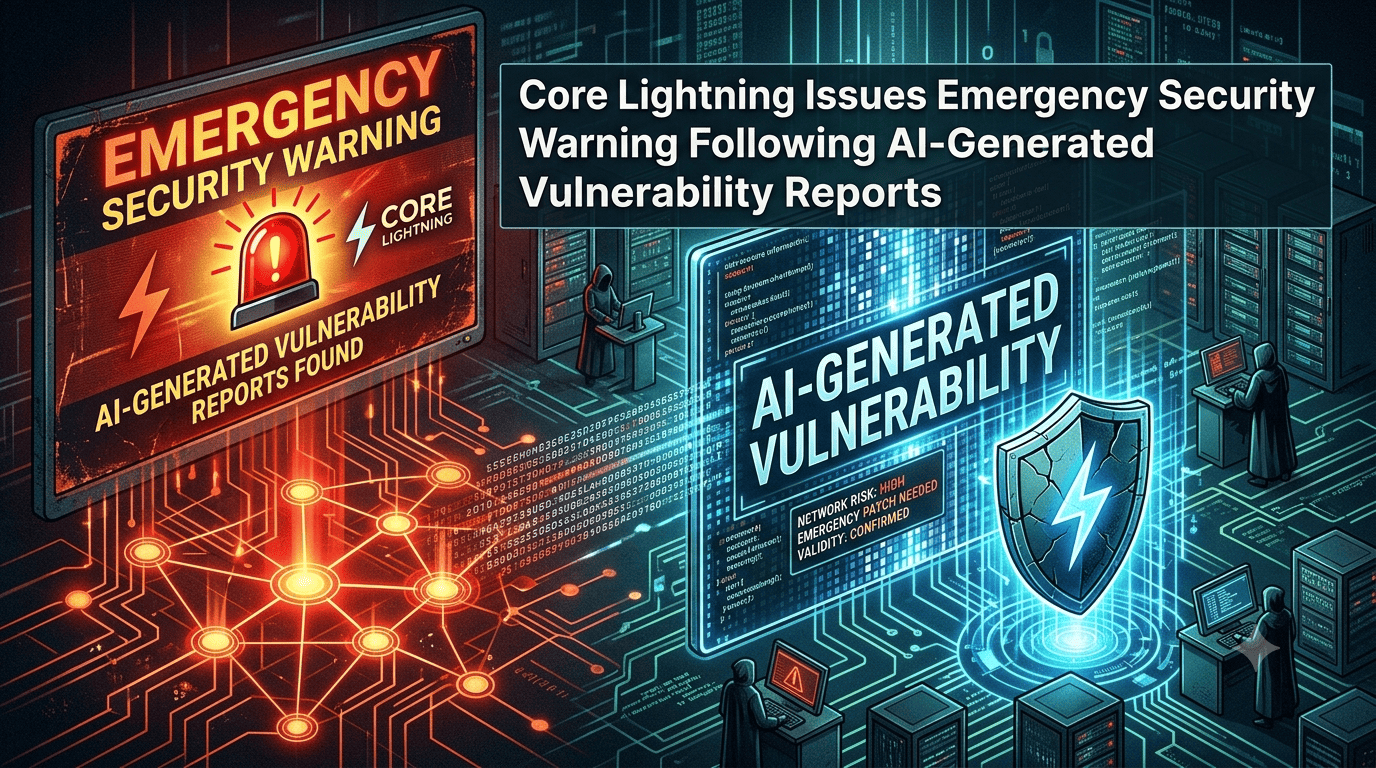
Developers of Core Lightning (CLN), a prominent implementation of the Bitcoin Lightning Network protocol, issued an emergency security warning on August 23, 2026. The alert, disseminated via Stacker News, comes in response to a series of vulnerability reports that have raised concerns regarding the immediate safety of network nodes. The development team has characterized the situation as urgent, requiring immediate action from node operators to safeguard their funds and maintain the integrity of the network.
The catalyst for this emergency measure was a ten-day influx of Common Vulnerabilities and Exposures (CVE) reports starting around August 13. According to the developers, these reports were generated by artificial intelligence and submitted by several different sources. While the specific nature of the vulnerabilities remains undisclosed due to security protocols, the volume and origin of these reports have prompted a significant shift in the project’s maintenance and support strategy.
Key Points of the Security Alert
- Core Lightning developers issued an emergency warning on August 23, 2026, following a surge of AI-generated security reports.
- A 14-day technical embargo is currently in place to allow node operators time to update their software before exploit details are made public.
- Support for older software versions, specifically version 26.04 and earlier, has been officially terminated due to identified risks.
- Node operators are required to either install newly released signed binaries or take their nodes offline to mitigate potential exploitation.
The Surge of AI-Generated Security Reports
The security landscape for open-source projects is shifting as artificial intelligence tools become more prevalent in bug hunting. Between August 13 and August 23, the Core Lightning team received multiple CVE reports that appeared to be the product of AI-driven analysis. This phenomenon is not isolated to the cryptocurrency sector. Earlier in 2026, Google revised its Open Source Software Vulnerability Reward Program following a massive increase in AI-generated submissions. Many of those reports were found to contain “hallucinations”—incorrect or fabricated information that mimics the structure of a legitimate security flaw.
Despite the potential for inaccuracies in AI-generated reports, the Core Lightning team has treated the recent submissions with high priority. The developers noted that even if some reports are flawed, the sheer volume necessitates a rigorous review process. In some instances, AI tools have proven capable of identifying genuine issues in mature codebases. For example, fuzzing tools utilized by major tech firms have previously uncovered vulnerabilities in long-standing projects like OpenSSL. The CLN team’s decision to issue an emergency warning suggests that the AI-generated reports may have highlighted credible risks that require immediate remediation.
Immediate Mitigation and the 14-Day Embargo
To manage the disclosure of these vulnerabilities, Core Lightning has implemented a 14-day embargo on all technical details. This strategy aligns with guidance from the Computer Emergency Response Team (CERT) regarding coordinated vulnerability disclosure. By withholding the specifics of the exploits, the developers aim to minimize the advantage given to potential adversaries. This window is intended to provide the global community of node operators sufficient time to apply patches before the mechanisms of the vulnerabilities are widely understood.
During this embargo period, a temporary information hierarchy exists. Node operators must rely on the judgment and instructions of the CLN maintainers without the ability to independently verify the exploit mechanisms. The developers have been explicit in their instructions: operators must upgrade to the latest software versions or move their nodes to an offline state. Running a node offline prevents it from interacting with the network, thereby neutralizing the risk of remote exploitation while the operator prepares for an upgrade.
Furthermore, the CLN team has officially ended support for previous software releases. Version 26.04, which was widely used prior to this alert, is now considered deprecated. The developers cited “known risks” associated with these older versions, emphasizing that they will no longer receive security updates or technical assistance. This move forces a transition to newer, more secure iterations of the software, such as versions 26.06 or 26.09, which contain the necessary fixes.
Verification and Software Provenance
A critical component of the emergency response is the emphasis on software provenance. To ensure that operators are installing legitimate patches rather than malicious clones, the CLN team has released new signed binaries. These releases include team signatures, signed tags, and signed checksums. These cryptographic measures allow operators to verify that the software they are downloading is exactly what the developers intended to release and has not been tampered with by a third party.
The focus on reproducibility is also central to this update. By providing signed checksums, the developers enable technically proficient users to compile the software from source and verify that their output matches the official binaries. This level of transparency is vital in maintaining trust within the decentralized ecosystem, especially during a period where technical details are being withheld under embargo. It ensures that while the “how” of the vulnerability is hidden, the “what” of the solution is verifiable.
Broader Implications for the Lightning Network
The emergency update has broader implications for the health and stability of the Lightning Network. As a Layer 2 scaling solution for Bitcoin, the Lightning Network relies on a distributed web of nodes to route payments. When a significant number of nodes are instructed to go offline or are delayed in upgrading, the overall routing availability of the network can be impacted. This can lead to increased transaction failure rates or higher fees as the remaining active nodes experience higher demand.
The situation also highlights the evolving role of AI in cybersecurity. While AI can assist developers in finding bugs through advanced fuzzing and static analysis, it also empowers a wider range of actors to submit high volumes of reports, some of which may be low-quality or misleading. This creates a significant administrative burden for maintainers of open-source projects who must sift through these reports to identify genuine threats. The Core Lightning incident may serve as a case study for how other blockchain projects handle the intersection of AI-driven security research and coordinated disclosure.
What Happens Next
The 14-day embargo is expected to expire in early September 2026. Once the embargo is lifted, the Core Lightning developers are anticipated to release full technical details regarding the vulnerabilities identified in the AI-generated reports. This disclosure will allow the broader security community to analyze the flaws and understand how they were discovered and subsequently patched.
In the interim, the priority remains the widespread adoption of the new software versions. The success of this emergency intervention depends on the speed at which node operators transition away from version 26.04 and other unsupported releases. The CLN team will likely continue to monitor network health and provide updates as the situation evolves. For now, the focus is on containment and ensuring that the Lightning Network remains a robust and secure environment for Bitcoin transactions.