
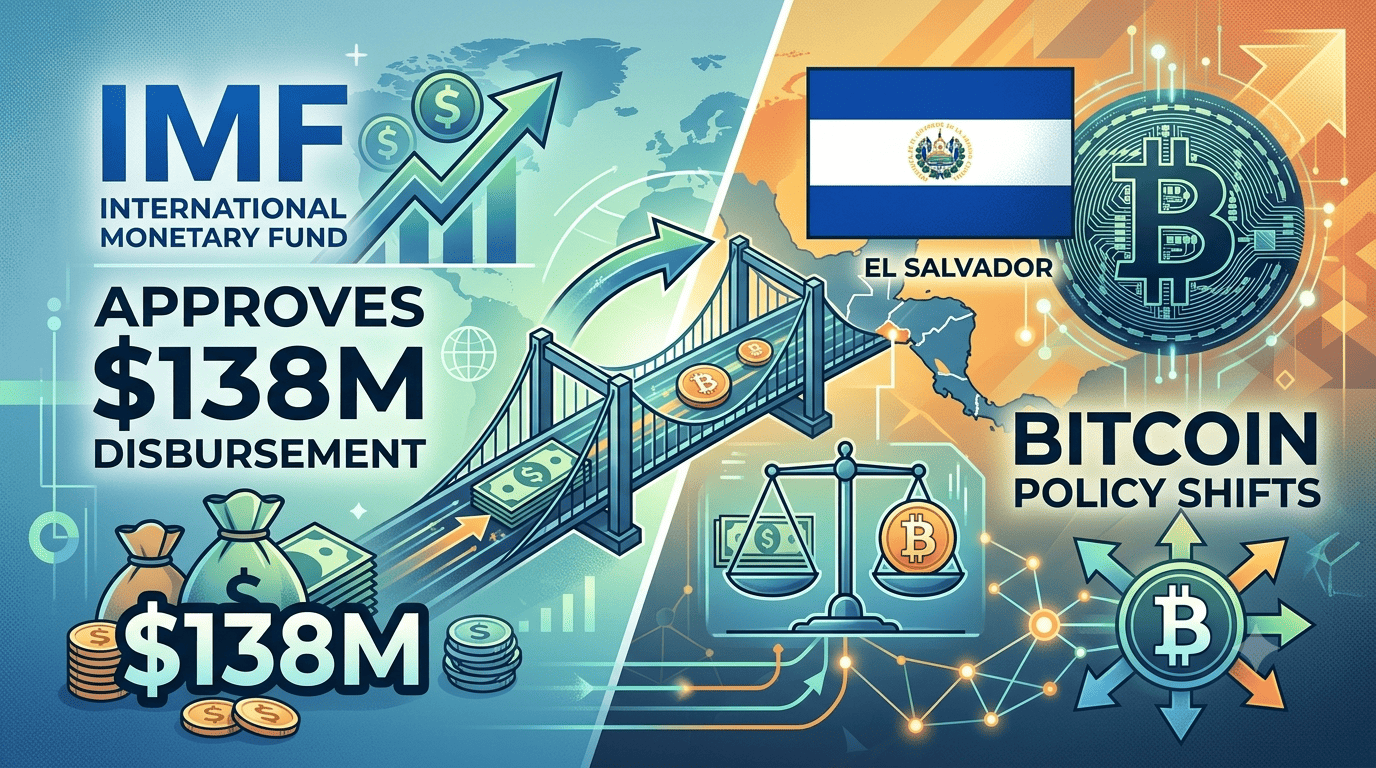
The International Monetary Fund (IMF) has concluded the second and third reviews of its comprehensive $1.4 billion loan program with El Salvador, marking a pivotal moment in the ongoing negotiations between the financial institution and the first nation to adopt Bitcoin as legal tender. On October 1, 2026, the IMF executive board finalized these assessments, paving the way for an immediate disbursement of approximately $138 million (SDR 101.96 million) to the Salvadoran government.
This latest development follows a period of intense scrutiny regarding El Salvador’s fiscal policies and its unconventional integration of digital assets into the national economy. While the IMF has historically expressed reservations about the risks associated with Bitcoin, the completion of these reviews suggests a pragmatic middle ground has been reached, contingent upon specific corrective measures and structural adjustments by the administration of President Nayib Bukele.
Key Developments in the IMF Review
- The IMF granted formal waivers for previously unmet performance criteria that were specifically linked to the government’s accumulation of Bitcoin.
- An immediate funding release of $138 million has been authorized to support the nation’s fiscal adjustment and reserve strengthening.
- Control and majority ownership of the state-sponsored Chivo wallet have been transferred to a private operator to mitigate public sector risk.
- A strict prohibition remains in place regarding the use of state funds for new Bitcoin purchases, though the reserve may grow through documented donations.
IMF Grants Waivers and Releases Funding
The completion of the dual reviews signifies a temporary resolution to the friction caused by El Salvador’s Bitcoin strategy. According to the IMF, the board decided to grant waivers for performance criteria that the government had failed to meet in previous periods. These failures were primarily associated with the sovereign accumulation of Bitcoin, a practice that the IMF has frequently warned could lead to fiscal instability and transparency issues.
The decision to move forward with the $138 million disbursement was predicated on what the IMF described as “corrective measures” taken by the Salvadoran authorities. These measures appear designed to align the country’s financial management more closely with international standards while allowing the government to maintain its legal tender laws. The $1.4 billion Extended Fund Facility (EFF), which was originally established in February 2025, is intended to span 40 months, providing a structured framework for El Salvador to address its debt obligations and bolster its economic foundations.
The IMF’s willingness to grant waivers indicates a shift toward monitoring and containment rather than outright opposition. By releasing the funds, the IMF provides El Salvador with necessary liquidity, but the accompanying conditions suggest that the window for state-led cryptocurrency expansion is narrowing significantly under the current agreement.
Structural Changes to the Chivo Wallet Ecosystem
One of the most significant structural changes required by the IMF involves the Chivo wallet, the government-launched application intended to facilitate Bitcoin transactions for the general population. In a move to distance the national treasury from the operational and financial liabilities of the platform, the Salvadoran government has transferred majority ownership and operational control of Chivo to a private entity.
Since its inception, the Chivo wallet has been a point of contention for international observers, who raised concerns about its impact on financial integrity and the potential for public funds to be lost through market volatility or technical mismanagement. By privatizing the operator, the government aims to satisfy IMF requirements for reducing public-sector exposure to the digital asset ecosystem. This transition is viewed as a necessary step in the “unwinding” of state involvement in the day-to-day mechanics of Bitcoin usage among the citizenry.
The IMF has signaled that future financing reviews will depend heavily on the successful and full unwinding of any remaining public-sector exposure to the Chivo wallet. This suggests that while Bitcoin remains legal tender, the infrastructure supporting it must operate independently of the state’s balance sheet to meet the fund’s criteria for fiscal safety.
New Constraints on Bitcoin Accumulation
Under the terms of the updated agreement, the Salvadoran government is currently prohibited from using public funds to acquire additional Bitcoin. This ban on fresh state-funded purchases is a cornerstone of the IMF’s strategy to prevent further fiscal risk. However, the agreement does allow for the nation’s Bitcoin reserves to increase through “documented donations,” a distinction that allows the government to maintain its pro-crypto stance without violating the terms of the loan.
Current data indicates that El Salvador holds a total of 7,794.37 Bitcoin. At current market valuations, this reserve is estimated to be worth approximately $666.1 million. The IMF’s monitoring process now involves a clear distinction between coins acquired through previous public expenditures and those received through external contributions. This level of granular tracking is intended to ensure that the government adheres to the spending limits imposed by the EFF.
Furthermore, the IMF is demanding a significant increase in the transparency of these holdings. The government is now required to improve the disclosure of all public-sector crypto assets and to strengthen the regulatory framework governing digital-asset providers within the country. These transparency measures are aimed at preventing the “black box” perception of the national Bitcoin reserve, which has been a recurring criticism from both domestic and international financial analysts.
Context of the Extended Fund Facility
The $1.4 billion Extended Fund Facility was approved in early 2025 as a lifeline for El Salvador’s economy, which has faced challenges related to high debt-to-GDP ratios and limited access to traditional international capital markets. The program was designed to support a multi-year fiscal adjustment, strengthen the country’s international reserves, and implement necessary reforms within the financial sector.
The tension between El Salvador’s Bitcoin Law and the IMF’s mandate for global financial stability has been a defining feature of this relationship. The IMF’s primary concern remains the potential for Bitcoin’s volatility to spill over into the broader economy, affecting everything from consumer prices to the stability of the banking system. By imposing strict reporting requirements and limiting the government’s ability to buy more Bitcoin, the IMF is attempting to ring-fence the cryptocurrency experiment, ensuring it does not jeopardize the country’s ability to repay its debts.
What Happens Next
The path forward for El Salvador involves a series of rigorous milestones that must be met to secure the remaining portions of the $1.4 billion loan. The IMF has made it clear that future reviews will be contingent on the government’s ability to provide consistent and verifiable transparency regarding its Bitcoin reserves. This will likely involve regular audits and public reports that detail the movement and storage of the nation’s digital assets.
Additionally, the full privatization of the Chivo wallet ecosystem will remain under the microscope. The IMF expects a complete separation of public funds from the wallet’s operations, a process that may take several months to finalize. Any deviation from this path or any unauthorized use of state funds for Bitcoin purchases could lead to a suspension of future disbursements.
As the 40-month program continues, the global financial community will be watching closely to see if El Salvador can successfully balance its ambitions as a Bitcoin pioneer with the fiscal discipline required by the world’s lender of last resort. The success of this arrangement could serve as a blueprint—or a cautionary tale—for other nations considering the integration of decentralized digital assets into their sovereign financial systems.