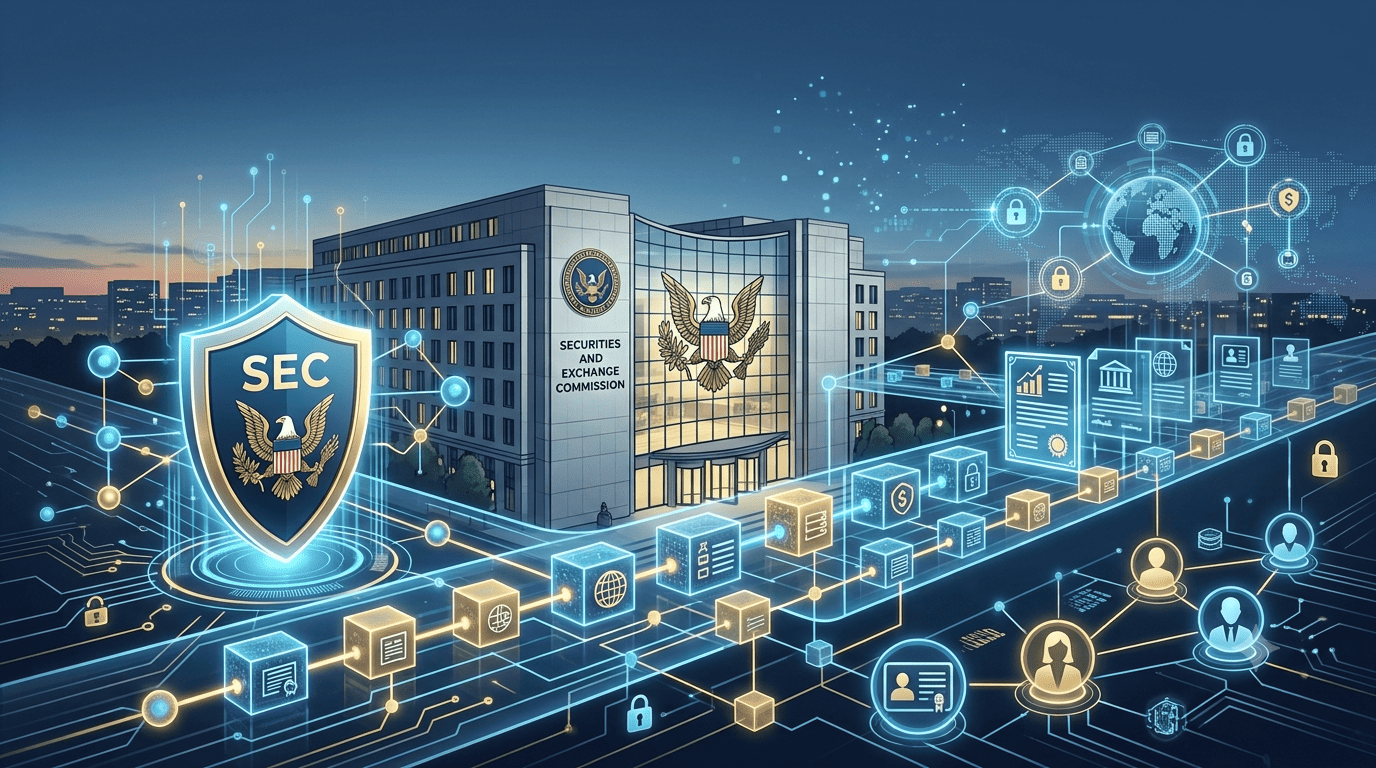
The United States Securities and Exchange Commission (SEC) has introduced a comprehensive proposal to modernize the regulatory framework governing transfer agents, potentially paving the way for public blockchains to serve as the primary infrastructure for corporate recordkeeping. This move represents a significant shift in how the federal regulator views distributed ledger technology (DLT) within the context of traditional financial markets.
Under the leadership of Chairman Paul Atkins, the commission is seeking to replace decades-old requirements with a framework that acknowledges the capabilities of modern electronic systems. The proposal aims to allow DLT to function as a company’s “master securityholder file,” provided that regulated transfer agents maintain strict oversight and accountability for the data. This development follows years of industry advocacy for clearer guidelines regarding the tokenization of traditional securities.
Key Developments in the SEC Proposal
- The SEC proposes allowing public blockchains or DLT to serve as the official master securityholder file for companies, moving away from legacy systems.
- Regulated transfer agents will retain exclusive control over shareholder records, remaining legally responsible for the accuracy, security, and regulatory production of the data.
- The drafted rules would replace paper-based recordkeeping requirements that have been in place for approximately 50 years with modern electronic standards.
- Current identity requirements remain unchanged, meaning shareholders must still provide full names and physical mailing addresses rather than relying solely on digital wallet addresses.
Modernizing Half a Century of Financial Infrastructure
The existing regulations governing transfer agents—the entities responsible for tracking who owns a company’s stock—are largely products of the late 1970s and early 1980s. For nearly half a century, these rules have relied on a foundation of paper-based recordkeeping and manual processing. While the industry has moved toward electronic systems over time, the underlying regulatory language has often lagged behind the technological reality.
The new proposal seeks to bridge this gap by formally introducing electronic standards that accommodate the unique characteristics of distributed ledgers. By allowing a blockchain to serve as the master securityholder file, the SEC is acknowledging that a decentralized or distributed database can meet the rigorous standards required for official financial records. This shift is intended to reduce the administrative burden on transfer agents while potentially increasing the speed and transparency of securities settlement.
However, the transition is not a total abandonment of traditional oversight. The SEC emphasizes that while the technology may change, the obligations of the transfer agent do not. These agents must still ensure that the records are immutable, accurate, and available for inspection by regulators at any time. The proposal ensures that there is always a regulated human or corporate entity accountable for the digital ledger’s integrity.
The Role of Distributed Ledger Technology in Recordkeeping
The integration of DLT into the master securityholder file system marks a pivotal moment for the tokenization of real-world assets. Previously, SEC staff guidance had permitted some registered transfer agents to utilize DLT as an official record, provided they did not maintain a separate off-chain duplicate. This allowed firms like Securitize, which currently manages approximately $4 billion in assets, to operate within a grey area of existing staff-level permissions.
The new proposal seeks to codify these practices into formal law. By doing so, the SEC provides a clearer legal pathway for more institutions to adopt blockchain technology for securities management. The proposal specifically addresses the use of public blockchains, which has been a point of contention in previous regulatory discussions. By allowing public ledgers to serve as the source of truth, the SEC is opening the door for broader interoperability between different financial platforms.
Crucially, the SEC maintains that transfer agents must have “exclusive control” over the records. In a blockchain context, this likely means that while the data may exist on a public network, the ability to modify the official shareholder list or authorize transfers must remain restricted to the regulated agent. This balance is designed to leverage the transparency of blockchain while maintaining the investor protections inherent in a regulated financial system.
Identity Requirements and the Digital Wallet Debate
One of the most significant hurdles for the full adoption of blockchain in securities is the conflict between the pseudonymous nature of digital wallets and the stringent identity requirements of securities law. The SEC’s current proposal does not yet allow for the replacement of traditional identity markers with digital wallet addresses. Under the drafted framework, transfer agents are still required to maintain the full name and physical mailing address of every shareholder.
This requirement highlights a friction point between the crypto-native vision of decentralized finance and the regulatory reality of investor protection and anti-money laundering (AML) standards. The SEC notes that physical addresses are currently essential for communication, legal notices, and verifying the identity of investors. Without a physical address, the commission argues, the risk of fraudulent activity or lost accounts increases significantly.
However, the SEC has signaled a willingness to reconsider this stance. As part of the proposal, the commission has opened a public comment period to specifically address whether physical mailing addresses should be eliminated or replaced. The commission is asking for feedback on whether digital identifiers, such as email addresses or verified wallet addresses, could provide a sufficient level of security and communication reliability. This suggests that while the current draft is conservative, the final rule could be more progressive depending on industry input.
Regulatory Oversight and Reporting Standards
To ensure that the use of DLT does not obscure market activity, the SEC is also proposing significant changes to Form TA-2. This form is the annual report that transfer agents must file with the commission. The proposed updates would require agents to explicitly report on any securities that are managed using distributed ledgers. This includes identifying the specific tokenization agents or platforms involved in the process.
This level of granular reporting is intended to give the SEC a clearer picture of the burgeoning tokenized securities market. By identifying the platforms and agents involved, the regulator can better monitor for systemic risks and ensure that all participants are adhering to federal standards. It also provides a mechanism for the SEC to track the growth and evolution of DLT usage across the entire financial sector.
Commissioner Hester Peirce, a long-time advocate for clearer digital asset regulations, has frequently pointed out that the lack of formal rules has hindered innovation. This proposal, supported by Chairman Atkins, appears to be a direct response to those concerns. By creating a formal reporting structure, the SEC is attempting to bring the “shadow” use of blockchain into the light of a standardized regulatory environment.
What Happens Next
The release of this proposal initiates a 60-day public comment period. During this time, market participants, legal experts, and technology providers are encouraged to submit their feedback to the SEC. The commission will be particularly interested in responses regarding the feasibility of replacing physical addresses with digital identifiers and the technical requirements for maintaining “exclusive control” over a public ledger.
Following the close of the comment period, the SEC will review the submissions and determine whether to move forward with a final rule. This process can take several months, and the final version of the rules may differ significantly from the initial proposal based on the feedback received. If adopted, these changes would represent the most significant update to transfer-agent regulations in half a century, potentially setting a new global standard for the intersection of blockchain technology and traditional securities law.
The outcome of this proposal will likely influence how other regulatory bodies around the world approach the tokenization of assets. As the 60-day window begins, the industry will be watching closely to see if the SEC is truly ready to embrace a digital-first future for the American financial system.