
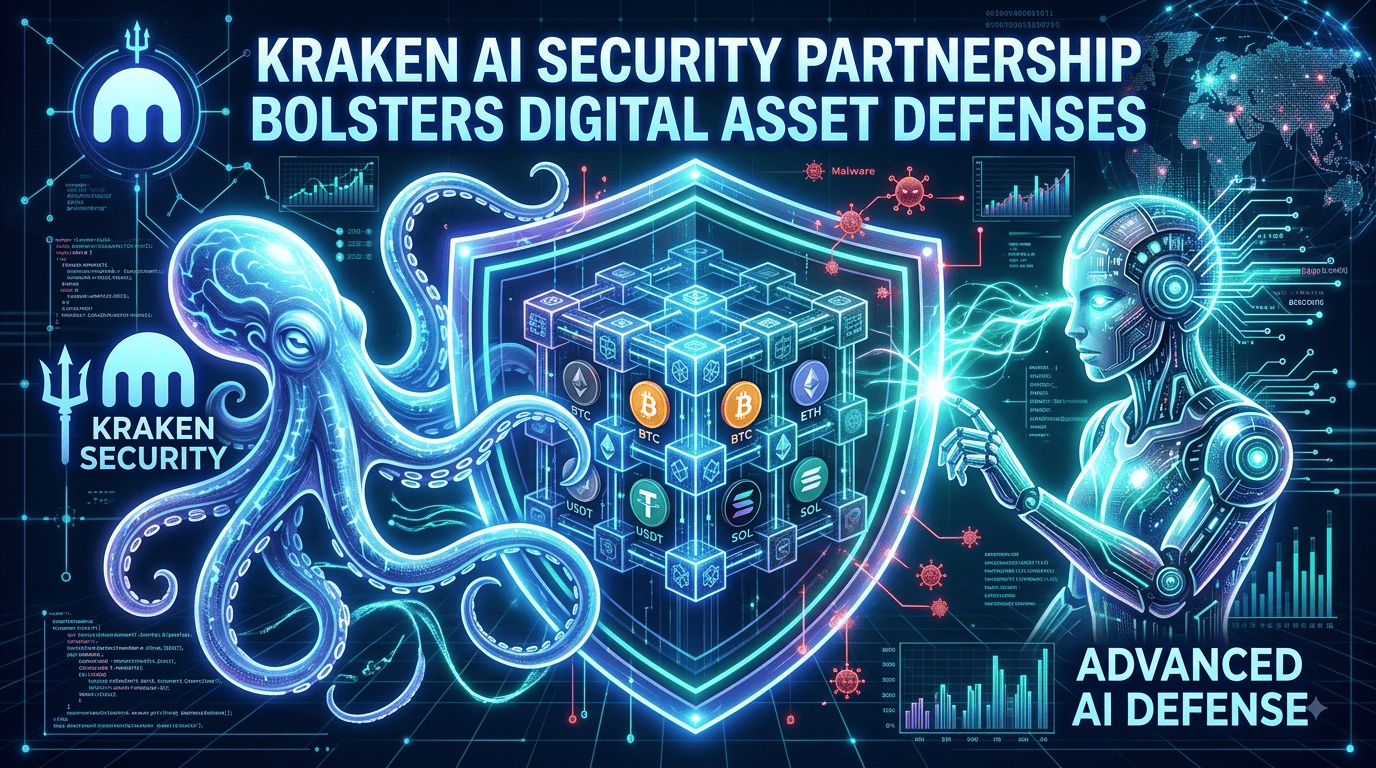
Payward, the parent organization of the Kraken cryptocurrency exchange, has officially joined Anthropic’s Project Glasswing to integrate advanced Kraken AI security protocols into its infrastructure. The partnership focuses on utilizing specialized large language models to identify and mitigate complex systemic vulnerabilities within the digital asset ecosystem.
Key Points:
- 100 percent of the security research findings will be released as open-source data.
- Project Glasswing utilizes specialized cybersecurity models developed by Anthropic for vulnerability detection.
- Payward serves as the first major cryptocurrency exchange parent to join this initiative.
The collaboration comes at a time when the digital asset industry faces an increasingly sophisticated landscape of cyber threats. By leveraging Anthropic’s specialized cybersecurity models, Payward aims to automate the process of “red-teaming,” a practice where security experts simulate attacks to find weaknesses before malicious actors can exploit them. The integration of artificial intelligence allows for a more comprehensive analysis of codebases that are often too large or complex for traditional manual auditing processes alone.
According to statements from the participating entities, the primary objective of Project Glasswing is to establish a defensive shield that evolves alongside emerging threats. Anthropic has developed these models to recognize patterns in software vulnerabilities that often elude standard scanning tools. For Payward, this represents a significant investment in its long-term security roadmap, building upon the work already established by its in-house security research division, Kraken Security Labs.
Kraken AI Security Integration
The technical implementation involves feeding vast amounts of anonymized security data into Anthropic’s models to refine their predictive capabilities. This process helps the AI understand the unique architecture of blockchain-based systems and exchange environments. As these models become more proficient at identifying “zero-day” exploits, the speed at which Payward can patch potential entry points is expected to increase significantly.
The decision to utilize Anthropic models specifically highlights a growing trend of crypto firms seeking partnerships with specialized AI laboratories. While general-purpose AI can assist in basic coding tasks, the highly sensitive nature of financial infrastructure requires models trained specifically for defensive cybersecurity applications. This approach reduces the “noise” of false positives and allows security engineers to focus on high-priority risks that could impact user funds or data integrity.
Open-Source Collaborative Efforts
A distinctive feature of this partnership is the commitment to transparency and public benefit. Rather than keeping the findings proprietary, Payward and Anthropic have pledged to share their discoveries with the wider cybersecurity community. This open-source philosophy is intended to raise the security floor for the entire industry, acknowledging that a breach at one major exchange can often have a cascading negative effect on market confidence and regulatory sentiment across the sector.
Industry analysts suggest that sharing these findings could prevent “copycat” attacks on other platforms that may share similar architectural components. By providing the tools and data necessary for others to secure their systems, Payward is positioning itself as a leader in industry-wide safety standards. This move mirrors previous efforts by Kraken to advocate for “Proof of Reserves” and other transparency-focused initiatives within the digital asset space.
The broader context of this move is rooted in the significant financial losses recorded by the crypto industry due to exploits. Data from various security firms indicates that billions of dollars are lost annually to smart contract failures and exchange-level breaches. As institutional interest in digital assets grows, the pressure on exchanges to provide “bank-grade” security has intensified, making AI-driven tools a necessity rather than a luxury for top-tier platforms.
Furthermore, the intersection of AI and crypto is not limited to security. Exchanges are increasingly using machine learning for market surveillance, anti-money laundering (AML) checks, and customer support. However, the application of AI to core defensive infrastructure remains the most critical frontier for maintaining the operational continuity of large-scale trading platforms like Kraken, which serves millions of users globally.
Looking forward, the success of Project Glasswing may serve as a blueprint for how other financial institutions approach the dual-use nature of artificial intelligence. As offensive AI tools become available to hackers, the development of robust defensive AI will be essential for the survival of digital financial ecosystems. The industry will likely monitor the initial findings from this collaboration to determine if automated vulnerability hunting can effectively reduce the frequency and severity of large-scale security incidents in the coming years.