
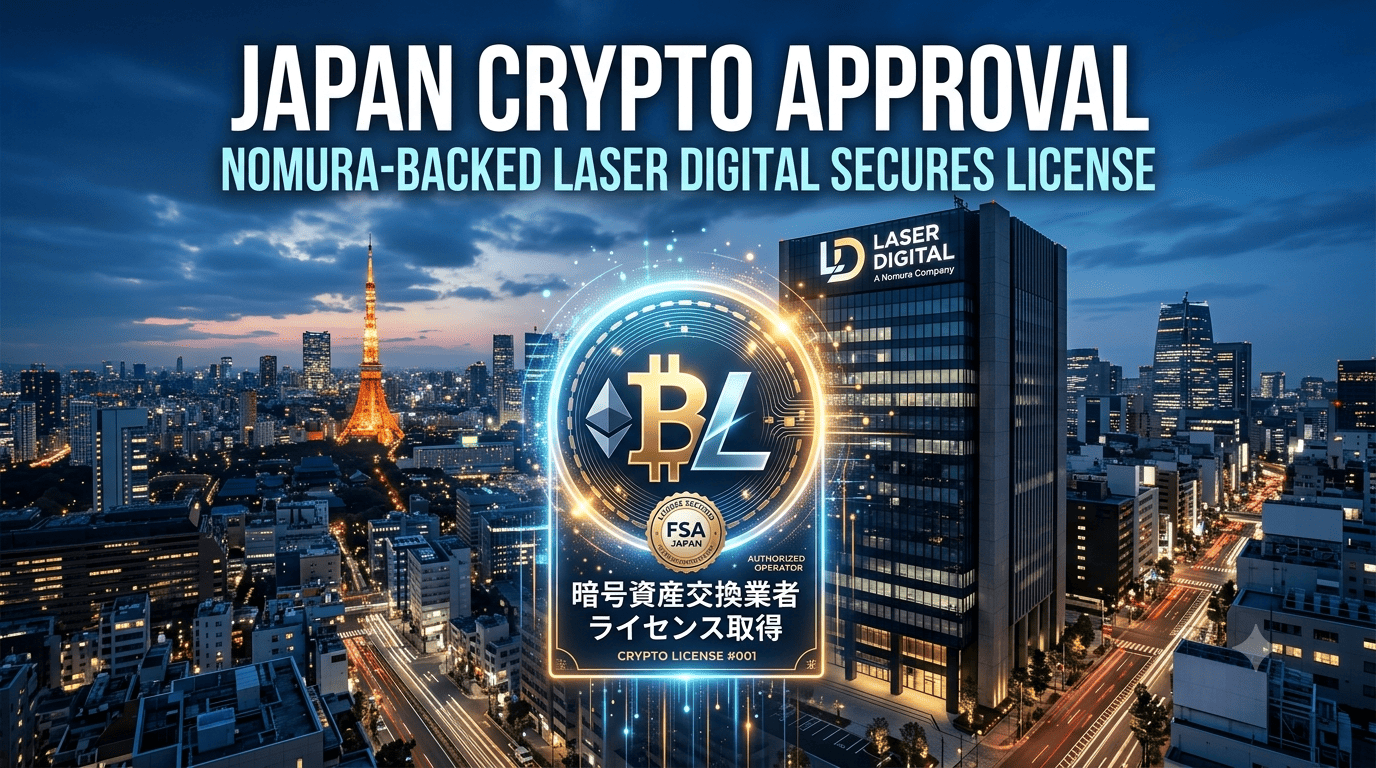
Laser Digital, the digital asset subsidiary of Nomura Holdings, has secured a landmark Japan crypto approval, marking the first time the country has issued a new exchange license to a major player in four years. The registration with the Financial Services Agency (FSA) allows the firm to offer institutional liquidity to domestic providers as appetite for digital assets grows across East Asia.
Key Points:
- 1st crypto-asset exchange license issued by Japanese regulators since 2020.
- 100 percent ownership of the local subsidiary maintained by Nomura Holdings.
- 3 distinct phases of service rollout focusing on institutional liquidity.
The newly formed entity, Laser Digital Japan, is now authorized to operate as a crypto-asset exchange service provider under the Payment Services Act. This regulatory milestone follows a rigorous vetting process by the FSA, which has historically maintained some of the strictest oversight standards in the global digital asset industry. The license enables the firm to provide market-making services and liquidity to existing Japanese crypto exchanges and institutional clients.
Nomura launched Laser Digital in 2022, headquartered in Switzerland, to bridge the gap between traditional finance and the decentralized economy. The expansion into Japan represents a strategic homecoming for the brand, leveraging Nomura’s established reputation in the domestic securities market. By securing this Japan crypto approval, the firm positions itself as a primary intermediary for local financial institutions seeking exposure to digital assets without the risks associated with unregulated offshore platforms.
Regional Liquidity Provision

The initial phase of operations for Laser Digital Japan focuses on the provision of liquidity. According to company statements, the firm will act as a counterparty for domestic crypto-asset exchange service providers (CAESPs), helping to stabilize market volatility and improve price discovery within the Japanese ecosystem. This service is critical for local exchanges that often face thinner order books compared to global counterparts due to strict capital controls and local listing requirements.
The liquidity business is intended to serve as a foundation for broader institutional services. Laser Digital plans to introduce proprietary trading desks and managed investment products once the initial infrastructure is operational. Data from recent market reports indicates that Japanese institutional interest in Bitcoin and other digital assets has remained resilient, even during the market downturns of 2022 and 2023, driven largely by the government’s proactive stance on Web3 technologies.
Regulatory Environment Evolution

The significance of this Japan crypto approval lies in its timing. Japanese regulators have not granted a major new crypto-asset exchange license since the market volatility of 2020, which prompted a period of conservative oversight. However, under the administration of Prime Minister, Japan has pivotally embraced “Web3” as a pillar of its “New Capitalism” economic policy. This shift has resulted in revised tax laws and clearer frameworks for stablecoins and decentralized finance.
The FSA’s decision to grant the license to a Nomura-backed entity suggests a preference for traditional financial incumbents to lead the next wave of crypto adoption in the country. This regulatory approach aims to combine the innovation of digital assets with the robust compliance frameworks of legacy finance. As reported by Reuters, the rigorous application process for such licenses ensures that only firms with significant capital reserves and sophisticated risk management systems can enter the market.
Historically, Japan’s regulatory landscape was shaped by high-profile security breaches at local exchanges like Mt. Gox and Coincheck. These events led to the implementation of strict user protection rules, including the requirement for exchanges to hold customer assets in cold storage. The fact that Laser Digital successfully navigated these requirements to secure a Japan crypto approval indicates that the firm has met the highest global standards for asset custody and operational security.
Institutional Market Expansion
The entry of Laser Digital Japan coincides with a broader trend of traditional Japanese financial giants entering the crypto space. Entities such as SBI Holdings and Mitsubishi UFJ Financial Group (MUFG) have also been active in developing blockchain-based settlements and digital asset custody solutions. This institutional competition is expected to drive down fees and improve the quality of service for professional traders and corporate treasuries.
For Nomura, the Japan crypto approval is a vital component of its global digital strategy. While Laser Digital’s international operations focus on venture capital and asset management, the Japanese arm will focus on the technical requirements of local liquidity and market infrastructure. This bifurcated approach allows the parent company to capitalize on both the high-growth potential of early-stage Web3 startups and the steady demand for institutional trading services.
Looking ahead, the successful integration of Laser Digital into the Japanese market may serve as a blueprint for other global financial institutions. If the firm can demonstrate that liquidity provision can be handled safely within the FSA’s framework, it may encourage regulators to expedite pending applications from other international providers. The move ultimately signals that Japan remains a key hub for digital asset innovation, supported by a regulatory regime that favors transparency and institutional participation over retail-led speculation.