
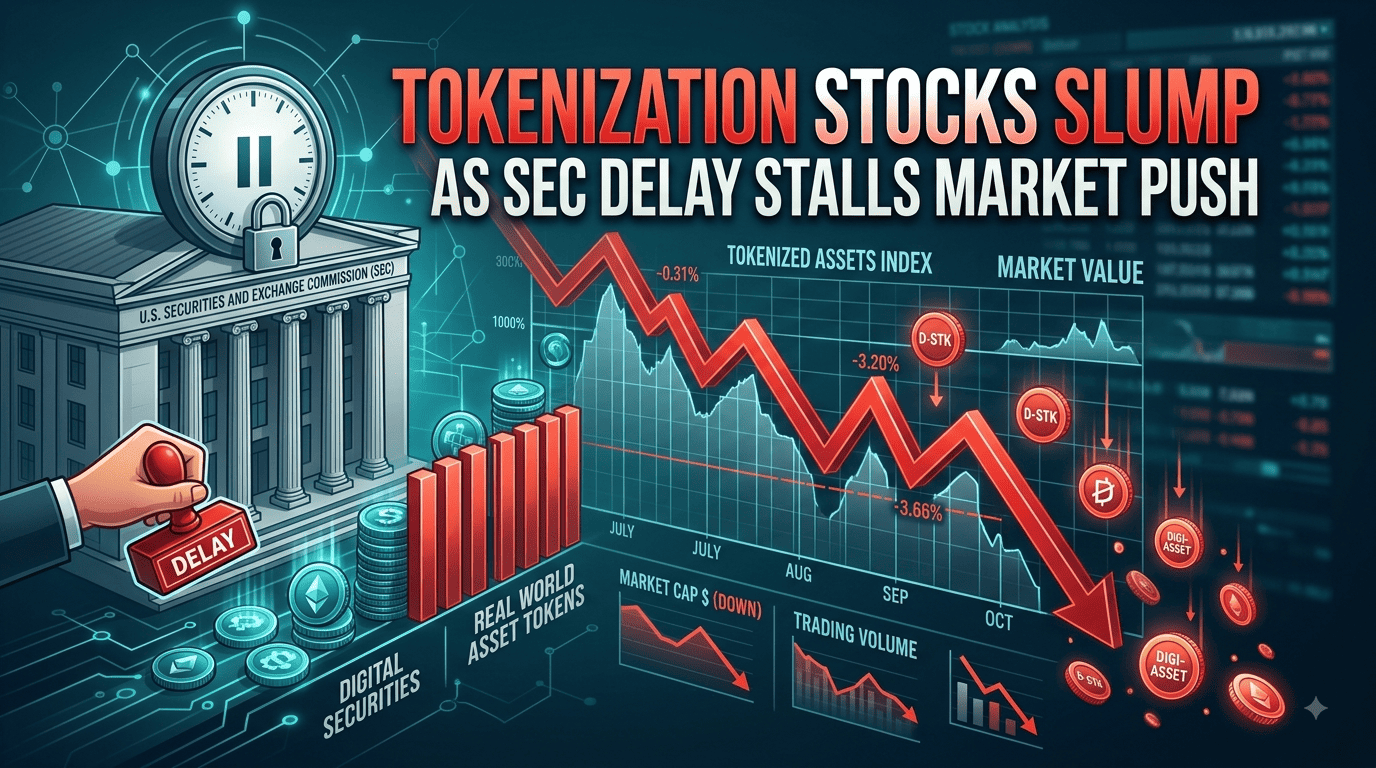
Shares of several prominent digital asset firms and tokenization stocks declined Friday following a regulatory setback from the U.S. Securities and Exchange Commission (SEC). The agency’s decision to delay key rule changes has introduced a temporary “speed bump” in the ongoing effort to integrate blockchain-based assets into traditional Wall Street infrastructure.
Key Points:
- Shares of Coinbase (COIN) and other sector-linked equities fell by over 3% during Friday’s trading session.
- The SEC delay specifically targets proposed rule modifications that would facilitate the broader trading of tokenized securities.
- Market analysts indicate that the regulatory pause affects at least three major industry players seeking deeper institutional integration.
The market reaction was swift as investors processed the implications of the SEC’s cautious stance. Tokenization stocks, which represent companies at the forefront of moving real-world assets (RWAs) onto blockchain ledgers, have been a focal point for institutional growth in 2024. However, the latest filing from the commission suggests that the path to a fully regulated, blockchain-based financial system remains fraught with administrative hurdles. The delay reportedly impacts specific applications and rule filings that would have allowed for more seamless interaction between decentralized ledgers and centralized exchanges.
According to market data, the selling pressure was most visible in public entities like Coinbase, while sentiment also cooled for private giants such as Circle and the Bullish exchange. These firms have spent considerable capital developing the technology required to digitize everything from Treasury bills to private equity. The SEC’s decision to postpone its ruling effectively extends the timeline for these firms to monetize their tokenization platforms at scale. This cautious approach by regulators remains a primary friction point for firms attempting to bridge the gap between traditional finance and digital assets.
SEC Regulatory Setback Impact
The delay is being viewed by industry participants not as a definitive rejection, but as a strategic pause that complicates the “Wall Street push” for crypto. The SEC has historically maintained a rigorous review process for any rule change that alters the clearing and settlement of securities. By delaying these decisions, the commission is signaling that it requires more data on the systemic risks associated with tokenized ledgers. This regulatory friction is particularly impactful for digital asset platforms that have recently pivoted toward providing infrastructure for institutional clients.
Institutional interest in tokenization has grown significantly, with major banks like BlackRock and JPMorgan launching their own blockchain initiatives. However, the success of these programs often relies on the ability of third-party firms to provide liquidity and compliance frameworks. When the SEC delays rule changes for intermediaries like Bullish or Coinbase, it creates a trickle-down effect that slows the deployment of capital from larger institutional players who require absolute regulatory clarity before moving significant tranches of assets on-chain.
Coinbase and Circle Volatility

Coinbase, acting as a primary barometer for the sector, saw its stock price react negatively to the news as traders weighed the impact on the company’s diversified revenue streams. While trading fees remain a core component of its business, Coinbase has increasingly positioned itself as a leader in the tokenization of assets and as a custodian for institutional products. Similarly, Circle, the issuer of the USDC stablecoin, is often viewed through the lens of its integration with traditional financial systems. Any regulatory delay that prevents the seamless movement of tokenized value is seen as a direct challenge to the utility of stablecoins in a regulated environment.
The broader market for tokenization stocks also includes various technology providers and specialist firms that facilitate the “on-ramping” of assets. For these companies, the SEC’s move represents a lengthening of the sales cycle for their proprietary technologies. Despite the dip in share prices, some market participants argue that the delay allows for a more robust framework to be built, potentially preventing future legal challenges. Nevertheless, the immediate impact on Friday was one of contraction as the market recalibrated its expectations for a swift regulatory green light.
This latest development mirrors previous patterns observed in the crypto industry, where initial excitement over institutional adoption is met with significant “speed bumps” from federal oversight bodies. The SEC’s current trajectory suggests a preference for incremental changes rather than a wholesale overhaul of existing market structures. As tokenization stocks navigate this period of uncertainty, the focus remains on whether the commission will provide a clear roadmap or if the industry will face a protracted series of similar delays throughout the remainder of the fiscal year.
Looking ahead, the industry awaits further clarification from the SEC regarding the specific technical requirements for tokenized asset custody and transfer. While the immediate market sentiment is bearish, the long-term trend of digitizing traditional financial instruments appears to remain intact, provided that firms can successfully navigate the evolving compliance landscape. Market participants will likely monitor upcoming commission meetings and public comment periods for signs that the current “speed bump” is nearing its resolution.