
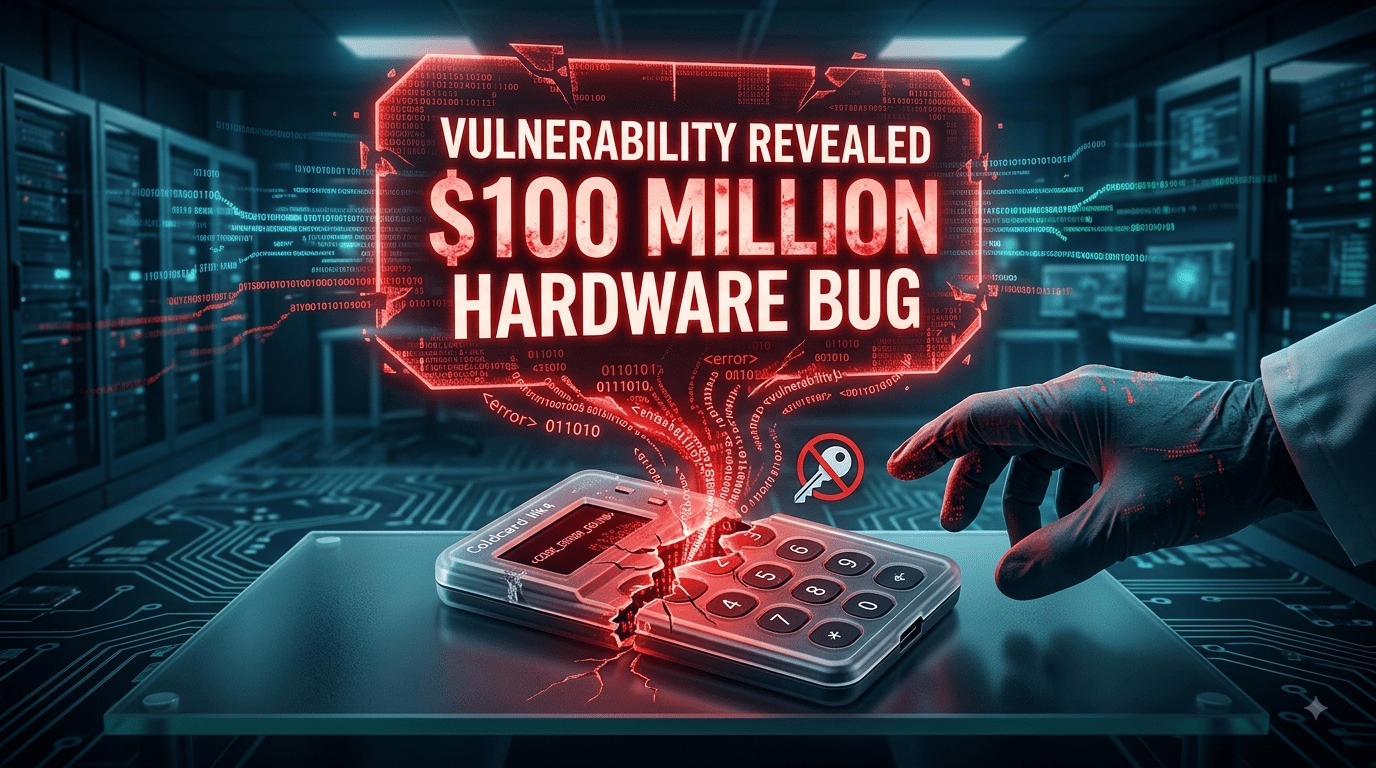
A critical Coldcard code bug that remained undetected within the device’s firmware for several years has allegedly facilitated the theft of approximately $100 million in digital assets. The security failure underscores a significant lapse in the “don’t trust, verify” ethos that typically defines the Bitcoin hardware security sector, according to recent forensic investigations into the compromised funds.
Key Points:
- $100 million in cryptocurrency was reportedly stolen due to the exploit.
- Flaws persisted in the firmware code for several years without detection.
- The incident marks a failure in open-source verification protocols.
The revelation of the Coldcard code bug has sent shockwaves through the self-custody community, particularly as Coldcard has long been marketed as a gold standard for “hardcore” Bitcoin security. The vulnerability allowed attackers to bypass certain signing logic, eventually leading to the unauthorized drain of high-value wallets. Security researchers note that while the code was technically available for public review, the specific logic error was subtle enough to evade routine audits and community scrutiny since its inception.
The financial impact of the breach is estimated at nine figures, making it one of the largest losses tied directly to a hardware wallet firmware defect. Investigators tracking the movement of the stolen assets indicate that the exploits were not the result of a single coordinated attack, but rather a series of sophisticated withdrawals that leveraged the same underlying weakness over an extended period. This suggests that the attackers may have identified the Coldcard code bug long before the broader security community became aware of its existence.
Chronic firmware oversight

The technical nature of the exploit involves a failure in how the device handled specific transaction scripts. By providing malformed data that the firmware did not properly validate, attackers could trick the device into signing transactions that it otherwise should have rejected. This breakdown in validation logic contradicts the primary purpose of a hardware wallet: to act as an immutable barrier between private keys and external threats. The fact that the bug survived multiple firmware updates suggests a lack of regression testing and deep-code analysis by the manufacturer.
Industry analysts point out that the “don’t trust, verify” maxim is often applied to blockchain data, but rarely to the complex assembly code governing hardware devices. While Coldcard has historically been praised for its “source-viewable” approach, this incident proves that visibility does not equate to security if no one is effectively auditing the code. A detailed report by security analysts highlights that even minor oversights in firmware can lead to catastrophic capital flight if the hardware is trusted implicitly by the user base.
Hardware wallet security risks

This breach serves as a case study for the evolving landscape of hardware wallet security risks. As more institutional and retail capital moves into self-custody, the incentive for bad actors to find “zero-day” vulnerabilities in popular hardware brands increases. The Coldcard code bug highlights a systemic risk in the industry: the reliance on a small number of developers to maintain the integrity of devices holding billions of dollars in value. The centralized nature of firmware development, even in “open” projects, creates a single point of failure that can be exploited for years before discovery.
Comparisons are being drawn to previous hardware vulnerabilities, such as the Ledger library exploit or various Trezor physical access flaws. However, the Coldcard incident is distinct because it involves a logical error in the signing process itself, rather than a physical or third-party software integration issue. This places the responsibility squarely on the internal code review processes of the manufacturer. The industry is now facing calls for more rigorous, third-party cryptographic audits that go beyond simple functional testing to include adversarial simulations.
The broader market impact of this revelation may lead to a shift in how sophisticated users manage cold storage. Many are now advocating for multi-signature (multisig) setups using hardware from different manufacturers to mitigate the risk of a single Coldcard code bug or similar firmware flaw compromising an entire treasury. This “defense in depth” strategy is becoming the new standard for managing significant digital asset holdings in an era where even the most trusted hardware can harbor long-standing defects.
Moving forward, the manufacturer is expected to release a comprehensive post-mortem and updated firmware patches to address the vulnerability. However, for the victims of the $100 million hack, the focus remains on asset recovery and the potential for legal recourse against the security providers. The incident likely marks the beginning of a more scrutinized era for hardware wallet manufacturers, where marketing claims of “unbreakable” security will be met with increased skepticism and demands for transparent, third-party validation.