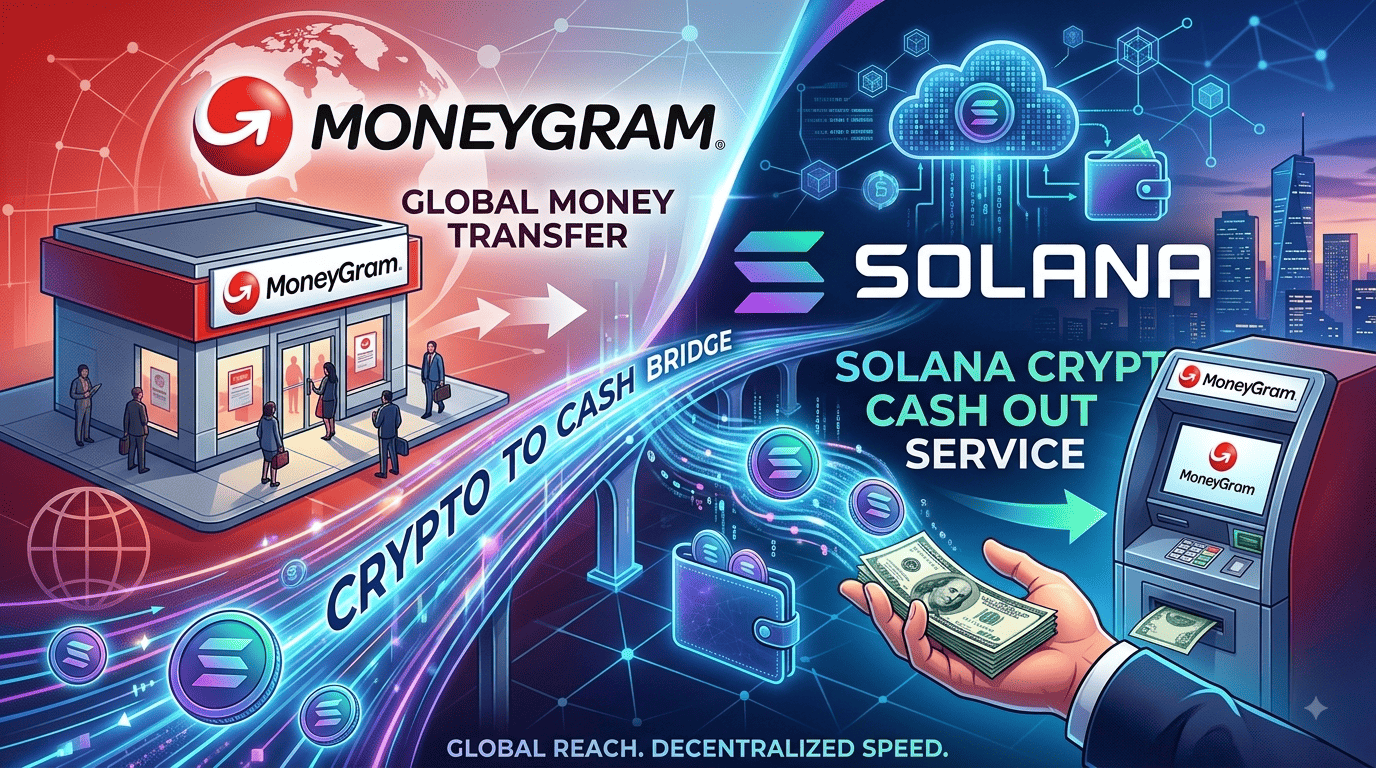
MoneyGram International Inc. has officially expanded its digital asset services to the Solana blockchain, enabling users to move between cryptocurrencies and local fiat currencies via its global retail network. The integration allows Solana-compatible wallets and decentralized applications to offer customers the ability to convert digital assets into physical cash at participating MoneyGram locations worldwide. This development marks a significant extension of MoneyGram’s existing blockchain strategy, which previously established a presence on the Stellar network.
The service specifically targets the utility of stablecoins, allowing for seamless transitions between USDC and sovereign currencies without requiring a traditional bank account. According to the company, the move is designed to bridge the gap between digital finance and physical commerce by leveraging Solana’s high throughput and low transaction costs. The integration is expected to facilitate easier access to the crypto economy for underbanked populations and those in regions with limited financial infrastructure.
The partnership utilizes the Solana network’s speed to process transactions that can be finalized at MoneyGram’s physical kiosks. Users initiate the transfer within a Solana-based wallet, selecting a cash-out option that generates a specific reference code. By presenting this code and valid identification at a MoneyGram agent location, the user receives their funds in local currency. This process mirrors the functionality already established on the Stellar blockchain, which MoneyGram launched in 2022.
Expanding On-Chain Retail Access
Industry analysts suggest that the choice of Solana reflects the network’s growing prominence in the global payments sector. Solana has recently seen increased institutional interest due to its ability to handle thousands of transactions per second, a technical prerequisite for mass-market financial applications. Data from the Solana Foundation indicates that the network’s ecosystem of developers and active users has remained resilient, providing a ready-made audience for MoneyGram’s retail services.
The expansion also highlights a broader trend of traditional financial institutions integrating with decentralized protocols to enhance remittance services. By using blockchain as a settlement layer, companies can bypass several intermediaries typically involved in cross-border transfers. MoneyGram’s internal data shows that the cost of these blockchain-enabled transfers is often significantly lower than legacy wire methods, a factor that could drive further adoption among the global workforce sending money home.
Since its acquisition by Madison Dearborn Partners, MoneyGram has pivoted toward digital asset integration to remain competitive in a changing landscape. The firm has sought to redefine itself as a technology-first payments company rather than a traditional cash-transfer house. This strategy aligns with the increasing demand for “on-ramp” and “off-ramp” solutions that simplify the user experience for non-technical individuals interacting with crypto assets for the first time.
Strategic Pivot Toward Blockchain
The collaboration also strengthens the utility of USDC, the stablecoin issued by Circle, which serves as a primary liquidity vehicle for these transactions. As more traditional payment rails connect with Solana, the demand for regulated stablecoins is expected to rise. This ecosystem growth is supported by recent upgrades to the Solana network aimed at improving reliability and uptime, addressing previous concerns regarding network stability during high-volume periods.
Market observers will be watching the adoption rates of this service to gauge the global appetite for physical crypto-to-cash services in emerging markets. While digital-only exchanges dominate the market in developed nations, the ability to access physical cash remains a critical requirement in many parts of the world. Future updates from MoneyGram are expected to detail the specific regions showing the highest engagement with the Solana-based off-ramp.
Looking ahead, the success of the Solana integration could prompt other major payment providers to explore similar permissionless blockchain partnerships. Regulators are also expected to monitor these services closely as they combine the anonymity of some digital assets with the strict Know Your Customer (KYC) protocols of traditional money transfer organizations. For now, the move places Solana at the forefront of the race to provide real-world utility for blockchain technology in the global payments landscape.