
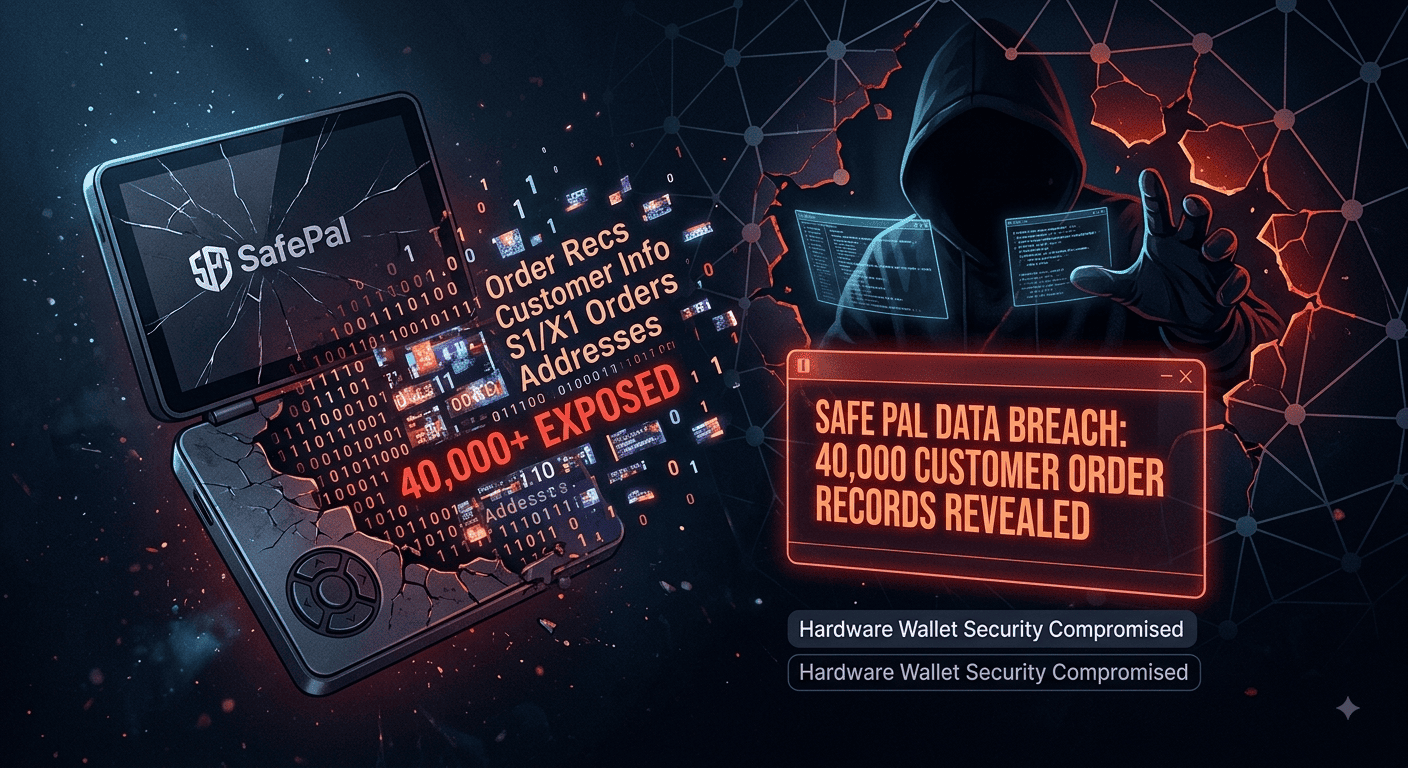
SafePal, a leading non-custodial cryptocurrency wallet provider, has officially disclosed a SafePal data breach that resulted in the exposure of personal order information belonging to approximately 40,000 customers. The incident, which was identified following an internal security audit, primarily impacted users who purchased products through the company’s direct sales channels.
Key Points:
- 39,600 customer order records were accessed by an unauthorized third party.
- Zero private keys or recovery seed phrases were compromised during the event.
- Unauthorized access originated through a vulnerability in a third-party logistical vendor.
The breach involved the exposure of sensitive personally identifiable information (PII), including customer names, physical shipping addresses, email addresses, and phone numbers. According to the company, the intruder managed to gain access to a database used for processing hardware wallet shipments. This specific database is isolated from the core security infrastructure that manages the SafePal App and hardware wallet firmware.
SafePal emphasized that the integrity of the blockchain assets themselves remains uncompromised. Because the company operates a non-custodial model, it does not store user private keys, PIN codes, or seed phrases on its servers. Consequently, the attacker was unable to gain access to any funds held within the wallets of the affected individuals. The company has begun notifying impacted users via official channels to provide guidance on security hygiene following the disclosure.
SafePal Data Breach Impact
The primary concern following the SafePal data breach is the potential for targeted phishing campaigns. In previous industry incidents where customer shipping data was leaked, bad actors utilized the information to send highly convincing fraudulent emails or physical mailers to users. These communications often attempt to trick victims into revealing their recovery phrases by posing as “emergency security updates” or “mandatory firmware upgrades.”
Security analysts suggest that the exposure of physical addresses presents a unique risk profile for cryptocurrency holders. By linking a physical location to a confirmed crypto user, the breach theoretically increases the risk of “wrench attacks” or physical coercion, although such incidents remain statistically rare. SafePal has urged its community to remain vigilant and reminded users that the company will never request a 12 or 24-word seed phrase under any circumstances.
According to a report by The Block, the company has already terminated its relationship with the compromised third-party vendor. The service provider in question was reportedly responsible for managing international shipping manifests, which necessitated the temporary storage of customer logistical data. SafePal stated that it is currently transitioning to a more robust, encrypted data management system to prevent similar recurrences in the future.
Historical Context of Wallet Breaches
This incident mirrors several high-profile data exposures within the hardware wallet sector over the last five years. In 2020, SafePal competitor Ledger suffered a massive marketing database breach that exposed the personal information of over 270,000 customers. That event led to a multi-year wave of phishing attacks and highlighted the inherent risks of maintaining centralized customer databases in a decentralized industry.
The recurring nature of these breaches highlights a structural vulnerability in the crypto hardware business model. While the devices themselves are designed to be “cold” and disconnected from the internet, the commerce platforms required to sell them remain part of the traditional web infrastructure. This creates a “honeypot” for hackers who may not be able to steal the crypto directly but can monetize the identity data of wealthy investors on the dark web.
SafePal has reiterated its commitment to security by announcing an upcoming audit of all third-party integrations. The company’s native token, SFP, showed minimal volatility following the announcement, suggesting that the market has largely decoupled administrative data leaks from the technical security of the underlying wallet technology. Investors seem to be distinguishing between “customer data” and “asset security.”
Moving forward, the industry is seeing a shift toward privacy-preserving commerce. Some hardware manufacturers have begun exploring the use of temporary data retention policies, where customer information is purged immediately after a successful delivery is confirmed. As the SafePal data breach investigation continues, the firm is expected to release a full post-mortem report detailing the specific entry point used by the attacker and the timeline of the recovery process.