
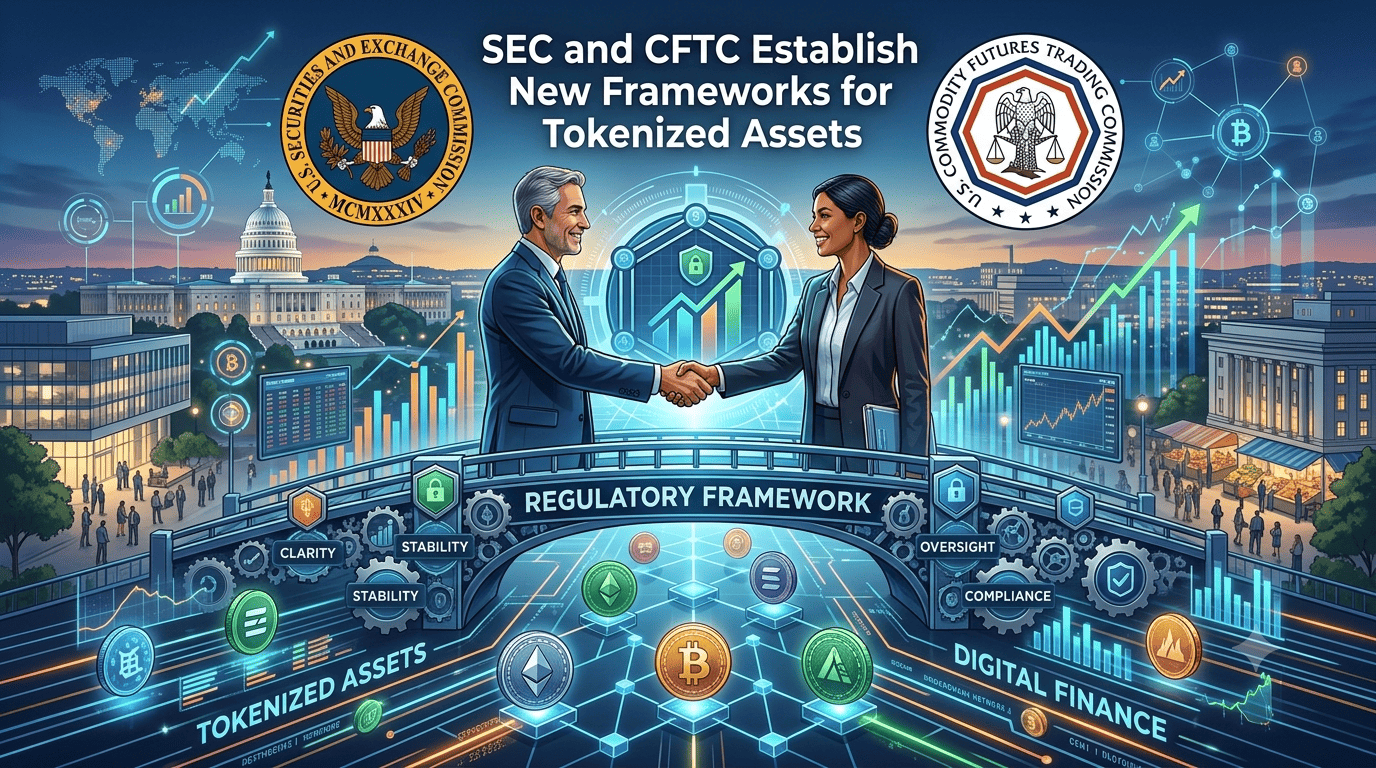
The landscape for digital asset regulation in the United States underwent a significant shift following a pivotal legislative stalemate in the US Senate. After the CLARITY Act (H.R. 3633) failed to advance on September 15, federal regulators have moved to implement new frameworks using their existing statutory authority. The Securities and Exchange Commission (SEC) and the Commodity Futures Trading Commission (CFTC) have both introduced measures aimed at integrating blockchain-based infrastructure with traditional financial markets.
The Senate’s decision not to move forward with the CLARITY Act came after a narrow 49-50 vote against cloture. This procedural hurdle effectively stalled the progress of a bill that many in the industry hoped would provide a comprehensive market structure for digital assets. In the absence of new legislation, the SEC and CFTC have pivoted toward administrative adjustments and no-action relief to address the growing demand for tokenized real-world assets and decentralized software interfaces.
Key Developments in US Digital Asset Oversight
- The US Senate failed to advance the CLARITY Act following a 49-50 vote, leaving a legislative void in market structure.
- The SEC introduced the Tokenized Securities Venue (TSV) category, allowing automated market makers to facilitate the trading of tokenized US stocks.
- The CFTC issued Letter 26-25, providing no-action relief for passive software providers connecting users to regulated derivatives markets.
- New SEC rules require tokenized shares to maintain all economic and governance rights, including dividends and voting power.
The SEC Establishes Tokenized Securities Venues
In a move that signals a new approach to equity trading, the SEC has created a regulatory category known as a Tokenized Securities Venue (TSV). This framework is designed to permit the trading of tokenized versions of US-listed stocks through the use of automated market makers (AMMs). By establishing this category, the commission is exploring how decentralized ledger technology can be applied to the traditional secondary market for equities.
The SEC has granted an exemption for TSVs that is currently scheduled to remain in effect for five years. Unless the commission chooses to modify or extend the terms, this regulatory window is set to expire on September 17, 2031. This period serves as a pilot phase, allowing the agency to monitor the stability and compliance of tokenized trading environments without immediately requiring a full overhaul of existing exchange regulations.
A critical component of the TSV framework is the preservation of shareholder rights. The SEC has mandated that any tokenized stock traded on these venues must mirror the economic and governance characteristics of the underlying traditional shares. This includes the right to receive dividends and the ability to participate in corporate governance through voting. The goal is to ensure that the transition to a tokenized format does not diminish the legal protections or financial benefits afforded to equity holders.
However, the SEC has also included safeguards for the companies whose shares are being tokenized. TSVs are required to provide a 30-day notice to stock issuers before they begin trading tokenized versions of their shares. During this calendar window, the issuers retain the right to object to the listing. If an issuer blocks the move, the TSV is prohibited from facilitating trades for those specific tokenized shares, giving traditional corporations significant control over how their equity is represented on-chain.
CFTC Provides Relief for Software Providers
Parallel to the SEC’s actions, the CFTC’s Market Participants Division has issued Letter 26-25. This document provides no-action relief for providers of passive software that allows users to access regulated derivatives markets. This move generalizes a previous specific relief granted to the software provider Phantom earlier this year under Letter 26-09, expanding the scope to include a broader range of technology firms.
The relief is specifically targeted at software developers who act as intermediaries between users and regulated trading platforms. Under the terms of Letter 26-25, these providers are not required to register as introducing brokers, provided they adhere to strict operational limits. The CFTC has clarified that this relief only applies to “passive” software providers—those that do not hold customer assets, do not exercise discretion over user orders, and do not generate explicit buy or sell signals.
This distinction is vital for the DeFi sector, as it separates the developers of user interfaces from the regulated entities that execute trades. While the software can facilitate the connection, the CFTC maintains that users must still be onboarded directly by registered firms. These include designated contract markets (DCMs) or futures commission merchants (FCMs), ensuring that the core regulatory requirements of the derivatives market remain intact even when accessed through modern software interfaces.
Contextualizing the Regulatory Shift
The timing of these agency actions is not coincidental. The failure of the CLARITY Act in the Senate highlighted the ongoing difficulty of passing comprehensive crypto-specific legislation in a divided Congress. By utilizing their existing statutory authority, the SEC and CFTC are attempting to provide a degree of clarity to market participants who have been operating in a state of regulatory uncertainty.
The SEC’s focus on TSVs reflects a growing interest in the tokenization of real-world assets (RWA). By allowing AMMs to handle tokenized stocks, the commission is acknowledging the potential efficiency of blockchain-based liquidity pools. However, the requirement for issuer consent and the preservation of voting rights suggests a cautious approach that prioritizes the stability of the existing corporate structure over rapid, permissionless innovation.
On the other hand, the CFTC’s Letter 26-25 addresses the technical reality of how modern users interact with financial markets. Many users prefer decentralized or non-custodial interfaces to manage their activities. By providing a path for software providers to operate without the heavy burden of broker registration, the CFTC is attempting to foster technological development while keeping the actual financial transactions within the perimeter of regulated entities.
What Happens Next
The next few years will serve as a testing ground for these new regulatory pathways. The five-year exemption for Tokenized Securities Venues provides a clear timeline for the SEC to gather data on how AMMs interact with the equity markets. Observers will be watching closely to see how many stock issuers exercise their right to block tokenization and whether the 30-day notice period becomes a point of friction for new trading venues.
For software developers, the CFTC’s no-action relief offers a more stable environment for building interfaces, but the restrictions remain tight. Any move toward providing algorithmic signals or taking custody of funds could immediately void the relief provided by Letter 26-25, potentially leading to enforcement actions. Developers will need to ensure their platforms remain strictly passive to avoid the requirement of registering as introducing brokers.
In the legislative arena, the failure of the CLARITY Act does not necessarily mean the end of congressional efforts. However, the focus may shift toward more targeted bills or amendments as the SEC and CFTC continue to define the market through their own rules and letters. As the September 2031 expiration date for the TSV exemption approaches, the industry will likely see further debates on whether these temporary measures should be codified into permanent law.