
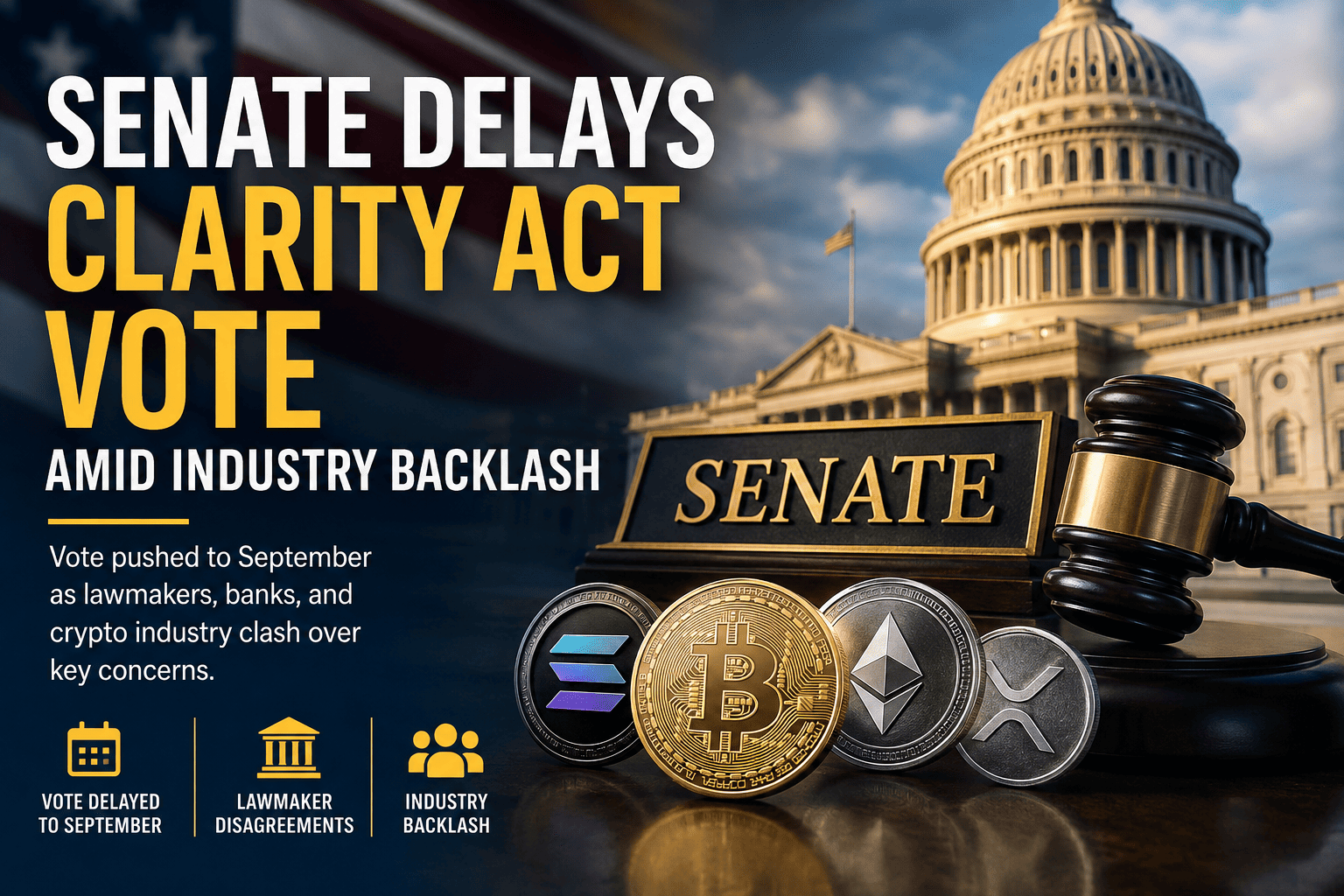
The United States Senate has declined to schedule a procedural vote for the Clarity for Payment Stablecoins Act this month, effectively stalling the legislative progress of one of the digital asset industry’s most anticipated regulatory frameworks. The decision has drawn immediate criticism from cryptocurrency advocates and industry leaders who expected the bill to advance before the end of the current legislative session. This delay marks a significant setback for proponents seeking to establish federal oversight and clear operational rules for stablecoin issuers within the United States.
Industry stakeholders had positioned the Clarity Act as a primary vehicle for legitimizing the stablecoin market and integrating digital assets into the formal financial system. The bill seeks to define which entities can legally issue stablecoins and establishes strict capital and reserve requirements to ensure 1-to-1 backing with liquid assets. According to legislative observers, the lack of a vote this month indicates a continuing bottleneck in the Senate Banking Committee despite bipartisan support in the House.
While the delay has caused widespread frustration, some policy analysts suggest the pause avoids a potentially flawed legislative outcome. Reports from Washington indicate that the postponement allows for further negotiation between House and Senate leadership on specific jurisdictional issues that remain unresolved. This perspective suggests that forcing a vote without a clear consensus could have resulted in the bill’s permanent defeat rather than a temporary delay.
Industry Backlash and Delay
The digital asset sector has long advocated for a federal regulatory “moat” that would allow domestic firms to compete with offshore stablecoin providers. Without the Clarity Act, the market remains under the fragmented supervision of state-level regulators and periodic enforcement actions by the Securities and Exchange Commission (SEC). Industry groups argue that this lack of a cohesive federal framework hampers innovation and pushes American companies to seek friendlier jurisdictions abroad.
Recent market data highlights the perceived urgency of this legislation, as the total market capitalization for stablecoins recently surpassed $170 billion. Without federal law, major issuers such as Circle and Paxos continue to operate primarily under New York state regulations, while Tether, the largest issuer by market cap, operates largely outside of primary U.S. jurisdiction. The delay prevents the implementation of a national standard that would apply to all issuers interacting with the U.S. financial system.
Legislative Deadlock Persists
The primary friction point preventing the vote involves the division of power between state and federal regulators. Senate Banking Committee members have expressed ongoing concerns regarding whether the Federal Reserve should hold ultimate veto power over state-chartered stablecoin issuers. This specific provision has remained a point of contention for months, preventing the bill from reaching a floor vote despite multiple rounds of revisions.
Despite the current standstill, some institutional analysts argue that a delay into the next legislative session might result in a more comprehensive policy package. This view holds that the current version of the bill lacked the necessary “bulletproof” bipartisan support required to survive a full floor vote in a divided Senate. According to this analysis, the industry is better served by waiting for a more stable political window than by risking a failed procedural vote now.
Election Impacts Regulatory Timeline
The upcoming election cycle is expected to further complicate the legislative calendar, as congressional focus shifts toward campaigning and mandatory budget appropriations. Industry lobbyists are now identifying the “lame duck” session following the November elections as the final opportunity for the 118th Congress to address digital asset policy. This compressed timeline leaves little room for the extensive debate required for complex financial legislation.
Market participants will monitor whether the House Financial Services Committee exerts pressure on Senate leadership to bring the bill back to the floor in the coming months. For the remainder of the year, the stablecoin sector is likely to remain in a period of regulatory uncertainty. Market participants must continue to navigate existing state-level frameworks while awaiting a definitive signal from federal lawmakers on the future of U.S. stablecoin policy.