
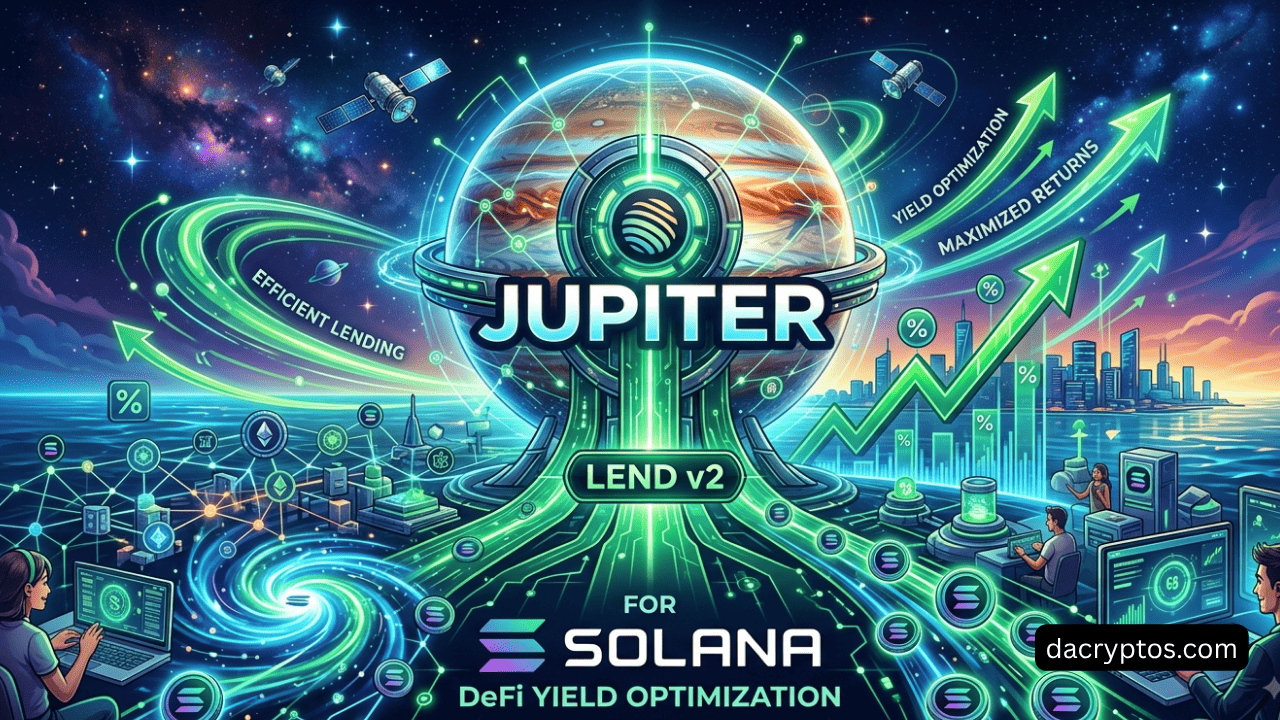
Jupiter, the leading decentralized exchange aggregator on the Solana network, has officially launched its Lend v2 protocol, introducing a novel mechanism to maximize capital efficiency for liquidity providers. The upgraded system allows deposited assets and borrowed capital to function as active trading liquidity, enabling users to capture yield from both interest rates and trading fees simultaneously. This structural shift aims to transform idle assets into productive resources by integrating Jupiter’s lending arm directly with its primary swap infrastructure.
The development represents a strategic expansion of Jupiter’s role within the Solana ecosystem, moving from a pure aggregation service to a comprehensive liquidity hub. According to the protocol’s technical documentation, the profitability of the new vaults is intrinsically linked to the Jupiter router’s ability to direct swap traffic through the Lend v2 pools. By leveraging its dominant market share in Solana’s trading volume, Jupiter seeks to provide higher baseline returns for lenders compared to traditional decentralized lending platforms.
Under the previous architecture, assets deposited into lending protocols often remained stagnant if they were not actively utilized by borrowers. Lend v2 addresses this inefficiency by ensuring that capital remains engaged in market-making activities even when borrowing demand fluctuates. This “earn twice” model is designed to attract deep liquidity to the platform, which in turn reduces slippage for traders and creates a self-reinforcing cycle of volume and yield.
Dual Yield Infrastructure Launched
The core innovation of Lend v2 lies in its “yield-on-yield” potential, which allows a single dollar of collateral to generate multiple streams of revenue. When a user deposits an asset like SOL or USDC into the protocol, the system does not simply hold the asset in a vault. Instead, these assets are made available to the Jupiter swap router to facilitate decentralized exchange transactions across the network. If the router identifies a path that utilizes a Lend v2 vault, the provider earns a portion of the swap fee in addition to the interest paid by borrowers.
This mechanism also applies to borrowed assets, creating a unique dynamic where the borrower can maintain a position while the underlying liquidity continues to support network activity. Jupiter’s developers noted that this approach significantly lowers the opportunity cost of providing liquidity on Solana. By capturing fees from both the lending side and the trading side, the protocol aims to offer more competitive rates than isolated lending or automated market-making (AMM) platforms can provide on their own.
Router Efficiency Drives Rewards
The success of the Lend v2 model is heavily dependent on the performance of the Jupiter swap router, which currently processes a substantial majority of all decentralized trading volume on Solana. Data from ecosystem analytics platforms shows that Jupiter’s routing algorithm is frequently the most cost-effective path for high-volume trades. By integrating lending vaults into this pathing logic, Jupiter ensures that its lenders are the primary beneficiaries of the network’s organic trading activity.
However, the integration of lending and swap liquidity necessitates sophisticated risk management protocols. Jupiter has implemented safeguards to ensure that vaults maintain sufficient depth to handle both large-scale withdrawals and high-frequency trading demands. The protocol utilizes dynamic fee structures and limit parameters to prevent liquidity crunches during periods of extreme market volatility, which have historically posed challenges for Solana-based DeFi applications.
Solana DeFi Competitive Landscape
The launch of Lend v2 places Jupiter in direct competition with established Solana lending protocols such as Kamino Finance and Solend. While these platforms have traditionally dominated the lending market by offering specialized vaults and leveraged products, Jupiter’s advantage lies in its massive user base and native control over swap flow. Analysts suggest that the ability to offer “built-in” trading yield could shift the balance of total value locked (TVL) toward integrated ecosystems that combine multiple financial services under a single interface.
Market participants are now observing the initial adoption rates and the stability of the dual-yield payouts as the protocol scales. While the promise of earning from two sources simultaneously is a compelling value proposition, the long-term viability of the model will be tested by the consistency of Solana’s network volume and the broader demand for on-chain leverage. Future updates are expected to include support for a wider range of assets and further optimizations to the routing logic to ensure maximum yield capture for all vault participants.