
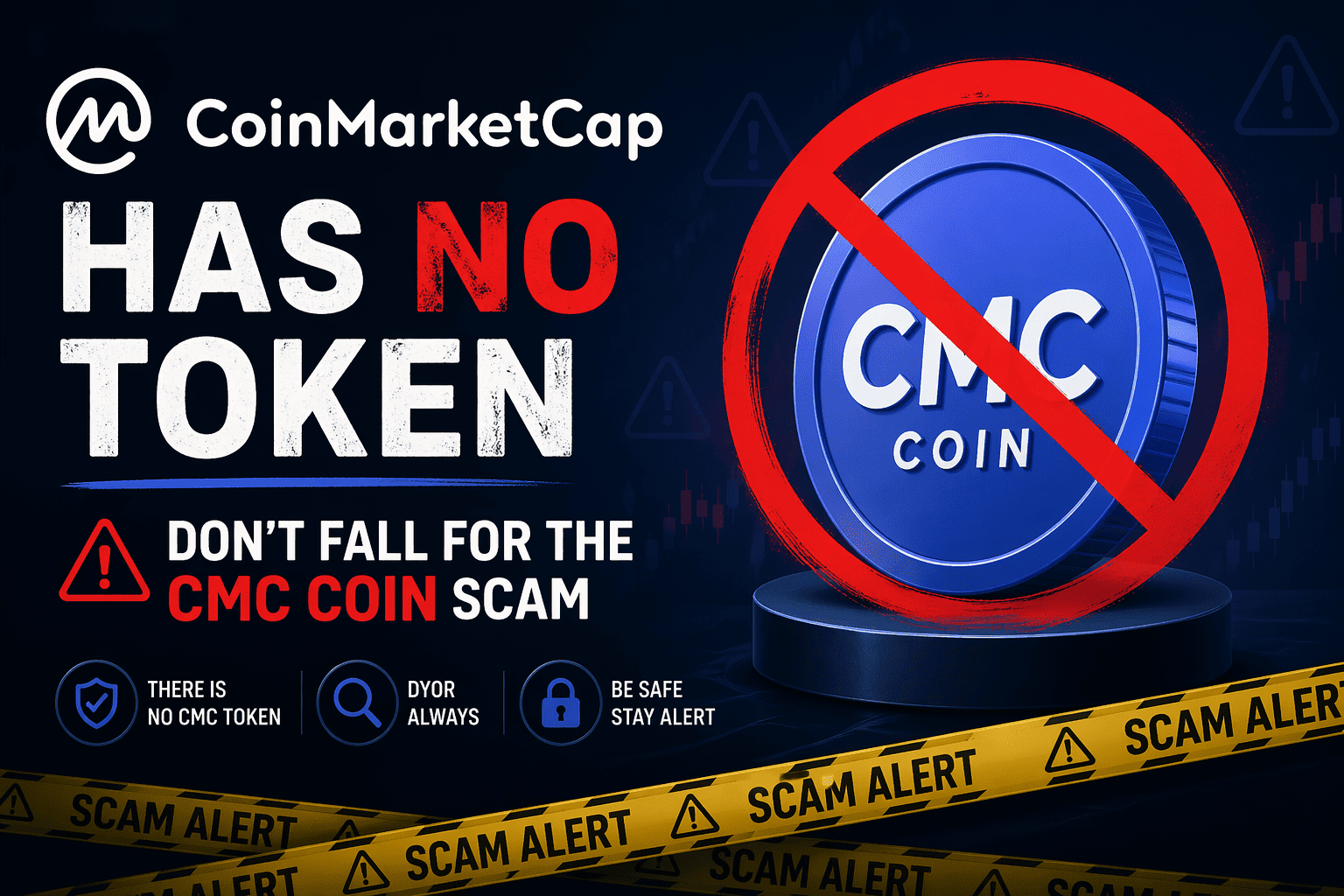
If someone told you CoinMarketCap just launched its own token, stop — it’s a lie. Scammers are using one of crypto’s most trusted brand names to steal money from unsuspecting investors, and it’s working.
What Happened
A wave of fake “CMC Token” promotions has been circulating across social media platforms, Telegram groups, and crypto forums. Scammers are creating fraudulent tokens — often labeled “CMC-20” or similar tickers — and marketing them as the official CoinMarketCap coin.
The pitch is convincing on the surface. They use CoinMarketCap’s logo, color scheme, and brand language to make everything look legitimate. Fake presale pages, countdown timers, and “early investor bonus” offers are all part of the playbook.
CoinMarketCap has officially and repeatedly confirmed on its verified X (Twitter) account: it does not issue any native token. Period.
Why It Matters
CoinMarketCap is one of the most visited crypto websites in the world. Millions of beginners trust it daily to check prices and research projects. That trust is exactly what scammers are exploiting.
When a scam uses a brand this recognizable, the damage spreads fast. New investors — especially those just entering crypto — are the primary targets. They see “CoinMarketCap token” and assume it must be legitimate because they recognize the name.
This type of scam also hurts the broader crypto space. Every high-profile fraud reinforces the narrative that crypto is unsafe, making mainstream adoption harder.
What This Means for Investors
This is a direct reminder that brand name ≠ legitimacy in crypto. Here’s how to protect yourself:
Never trust a token because of its name. Scammers can name their token anything — including after major platforms like CoinMarketCap, Binance, or CoinGecko.
Always verify directly. Go to CoinMarketCap’s official website (coinmarketcap.com) or their verified X account. If there’s no announcement there, it doesn’t exist.
Ignore DMs and ads promoting token launches. Legitimate projects don’t cold-message you about presales. If it came through a Telegram DM or a paid ad, be extremely skeptical.
Check the contract address. If someone insists the token is real, search the contract address on a blockchain explorer. A brand new address with no credible backing is a massive red flag.
The golden rule: If it feels like easy money tied to a famous brand, it’s almost certainly a scam.
Quick Take
- ✅ CoinMarketCap has no official token — any “CMC Token” is fake
- ✅ Scammers are using CMC’s brand to run fake presales and token launches
- ✅ Always verify directly on CoinMarketCap’s official site or verified social accounts before investing
FAQ
Q: Is there any legitimate CoinMarketCap token I can buy?
No. CoinMarketCap has not launched any token, coin, or cryptocurrency. If you see any project claiming to be an official CMC token — regardless of how professional it looks — it is a scam. Do not invest.
Q: What should I do if I already sent money to a CMC Token presale?
Unfortunately, crypto transactions are irreversible. Stop sending any further funds immediately. Report the scam to CoinMarketCap’s official support and flag the wallet address on community scam-tracking sites like Chainabuse.com. Warn others in any groups where you saw the promotion.
Disclaimer: This article is for informational purposes only and is not financial advice. Always do your own research (DYOR) before making any investment decisions.