
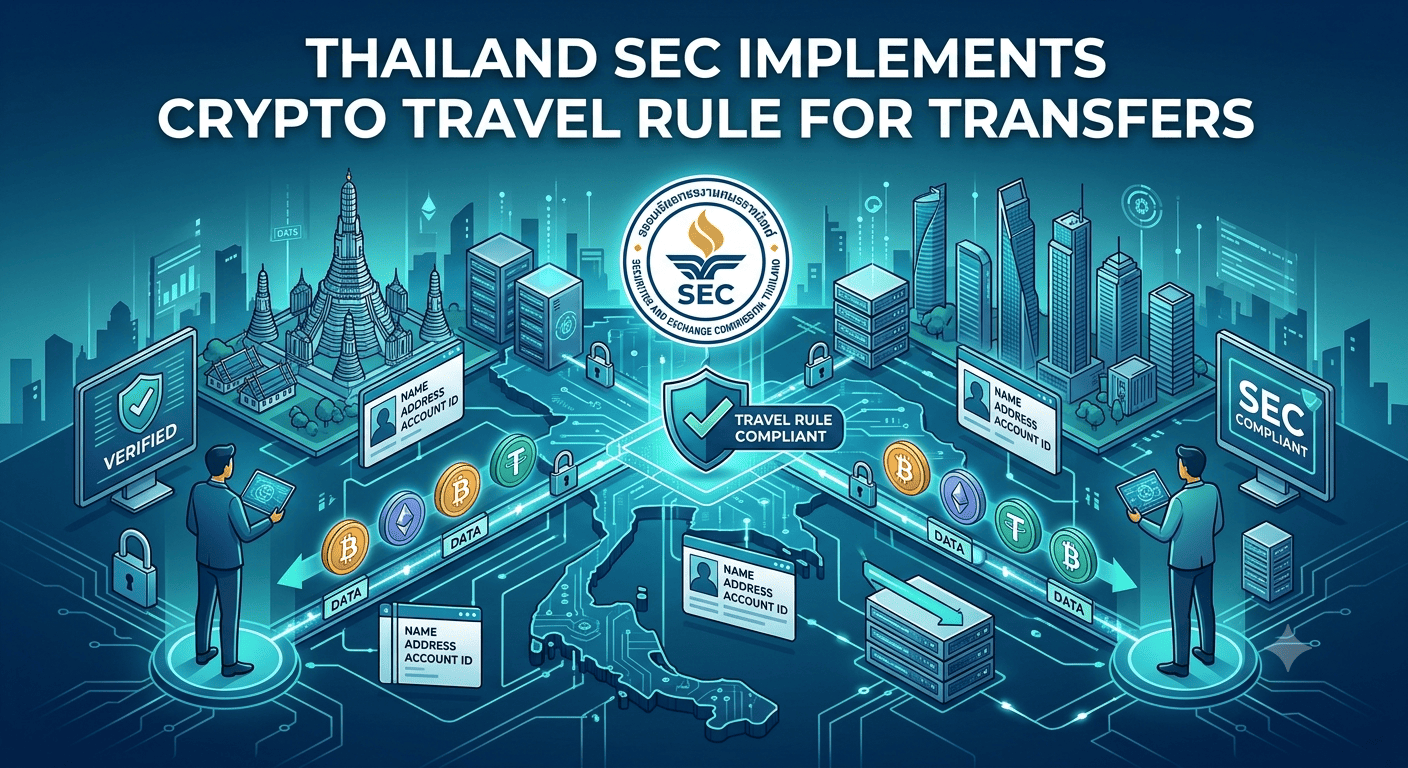
The Securities and Exchange Commission (SEC) of Thailand has officially introduced a new set of regulations known as the “Travel Rule,” aimed at increasing transparency within the digital asset sector. This regulatory update requires all supervised cryptocurrency platforms to identify the parties involved in every coin transfer. The move aligns Thailand with international standards for anti-money laundering (AML) and the combating of financing of terrorism (CFT), specifically targeting the anonymity often associated with blockchain transactions.
According to the official announcement made on September 2, 2026, following a notification dated August 25, regulated digital-asset operators are now mandated to collect and transmit comprehensive sender and recipient information. This requirement applies to all cryptocurrency transfers facilitated by licensed entities within the country. The SEC’s directive is designed to ensure that the flow of digital assets can be traced with the same level of scrutiny applied to traditional financial transfers.
Key Points of the New Regulation
- Mandatory Identification: Regulated platforms must collect and share data for both the sender and the recipient for every cryptocurrency transfer conducted through their services.
- Enhanced Disclosure Threshold: For any transfer exceeding the value of 30,000 baht, customers are required to provide additional geographic details, including the province or city and the country of the recipient.
- Self-Hosted Wallet Verification: Transfers involving non-custodial or self-hosted wallets that exceed 30,000 baht require the platform to verify that the user maintains ownership or control over the specific wallet.
- Data Retention Standards: All regulated digital asset operators must retain records related to these transfers for a minimum period of five years to facilitate potential audits or investigations.
Expanding the Scope of Transactional Transparency
The core of the new Thai SEC regulation centers on the 30,000 baht threshold. While basic identification is required for all transfers, transactions crossing this financial limit trigger a more rigorous data collection process. For individual recipients, the customer initiating the transfer must provide the specific city or province and the country of the person receiving the funds. This geographic tracking is intended to provide authorities with a clearer map of where capital is moving across borders.
The requirements become even more specific when the recipient is a legal entity rather than an individual. In cases where a transfer exceeds 30,000 baht and is directed toward a corporation or organization, the customer must provide the entity’s official registration number. This ensures that businesses operating within the crypto space are held to the same identification standards as individual users, preventing the use of shell companies or anonymous corporate structures for moving significant sums of digital currency.
Furthermore, the regulation addresses the flow of assets between different regulated platforms. For incoming transfers, the recipient’s platform is prohibited from allowing the user to move the coins out of their wallet until the sender’s information has been successfully collected. This “pre-clearance” mechanism ensures that no assets are released into the broader ecosystem without a verified trail of origin, effectively closing loops that might otherwise be exploited for illicit activities.
Verification Protocols for Self-Hosted Wallets
One of the most significant aspects of the SEC’s new rule involves self-hosted wallets, often referred to as private or non-custodial wallets. Because these wallets operate outside the direct control of a centralized exchange, they have historically presented a challenge for regulators seeking to implement the Travel Rule. Under the new Thai guidelines, any transfer to or from a self-hosted wallet that exceeds 30,000 baht requires the regulated operator to perform a verification check.
The operator must confirm that the customer either owns or has direct control over the self-hosted wallet involved in the transaction. This verification process is a critical component of the SEC’s strategy to prevent the use of anonymous wallets for large-scale transfers. While the specific technical methods for this verification may vary between platforms, the burden of proof lies with the regulated operator to ensure that the user is not merely a conduit for an unidentified third party.
This focus on self-hosted wallets highlights the SEC’s intent to bridge the gap between regulated exchanges and the decentralized nature of the blockchain. By requiring proof of ownership for larger transactions, the regulator seeks to mitigate the risks associated with the “unhosted” nature of private keys, ensuring that the identity of the person controlling the assets is always known to the service provider.
Operational Timelines and Record Retention
The implementation of these rules is not immediate, as the SEC has provided a grace period for digital asset operators to adjust their internal systems. Following the publication of the rule in the Royal Gazette, platforms have an 180-day implementation period to prepare. This window is intended to allow companies to develop the necessary software and data exchange protocols required to share information seamlessly with other domestic and international platforms.
Based on the current timeline, the full enforcement of these measures is expected by February 27, 2027. During this preparation phase, operators are expected to upgrade their Know Your Customer (KYC) and Anti-Money Laundering (AML) frameworks to handle the increased data load. The SEC has emphasized that the 180-day period is vital for ensuring that the exchange of data does not disrupt the efficiency of the market while still meeting the new compliance standards.
In addition to the immediate collection of data, the SEC has established strict record-keeping requirements. Regulated platforms must maintain all transfer-related information for at least five years. This long-term data retention policy ensures that historical transaction data remains available for law enforcement and regulatory bodies should an investigation arise years after the initial transfer. This mirrors the standards found in the traditional banking sector, further integrating cryptocurrency into the established financial regulatory landscape.
Scope of the New Regulatory Framework
It is important to note the specific limitations of the Travel Rule as outlined by the Thai SEC. The regulation is strictly focused on the transfer of digital assets between wallets and platforms. It does not apply to standard trades executed within an operator’s internal order book. If a user buys or sells cryptocurrency for another digital asset within the confines of a single exchange, the Travel Rule requirements for external data transmission are not triggered.
Additionally, the rule does not extend to the transfer or withdrawal of Thai baht. Traditional fiat currency transactions are already governed by existing banking and financial regulations in Thailand. The SEC’s new directive is specifically designed to address the unique challenges posed by the movement of “coins” or digital tokens, which can often bypass traditional banking rails.
The context of this development is rooted in a global push for more stringent oversight of the cryptocurrency industry. By formalizing these requirements, Thailand is positioning itself as a jurisdiction that adheres to the Financial Action Task Force (FATF) recommendations. The goal is to create a transparent environment that discourages financial crime while providing a clear legal framework for legitimate digital asset businesses to operate within.
What Happens Next
In the coming months, licensed digital asset operators in Thailand will begin the process of updating their user interfaces and backend systems. Customers can expect to see new prompts for information when initiating transfers, particularly those that exceed the 30,000 baht threshold. Platforms will likely provide guidance to their users on how to verify ownership of self-hosted wallets to ensure a smooth transition before the February 2027 deadline.
The SEC is expected to monitor the implementation phase closely, providing further clarifications if technical hurdles arise during the 180-day window. As the industry moves toward this new standard, the focus will remain on how effectively platforms can exchange data without compromising user privacy or transaction speed. The long-term impact of these rules on the Thai crypto market will depend on the ease with which operators can integrate these compliance measures into the daily user experience.