
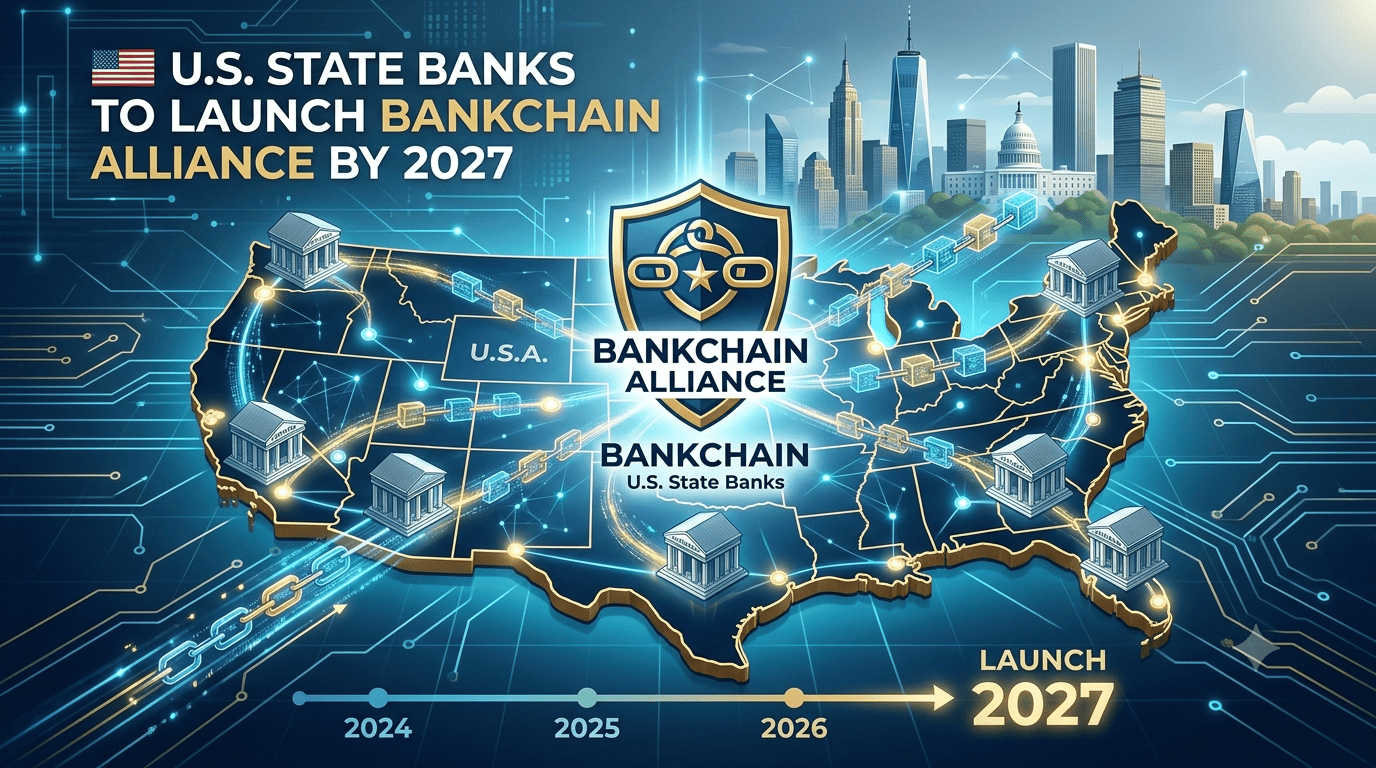
A group of U.S. state banking associations has announced plans to develop and launch a nationwide blockchain network known as the BankChain Alliance. The project, which is currently aiming for a 2027 launch, is designed to integrate digital asset capabilities directly into the traditional financial sector. By establishing a shared ledger, the associations intend to facilitate the issuance and management of stablecoins, payments, and tokenized deposits within a strictly regulated environment.
Key Points:
- The BankChain Alliance is targeting an official nationwide launch in 2027.
- The network will support stablecoins, electronic payments, and tokenized deposits.
- All operations will remain within the banking system’s existing regulatory sphere.
- State banking associations are leading the initiative to modernize regional banking infrastructure.
Developing the BankChain Alliance Infrastructure

The proposed BankChain Alliance represents a significant effort by state-level financial organizations to adopt distributed ledger technology (DLT). By creating a unified nationwide blockchain network, the participating associations aim to provide their member banks with the tools necessary to compete in an increasingly digital economy. This initiative seeks to bridge the gap between traditional banking and the burgeoning digital asset market.
According to reports, the 2027 timeline allows for the extensive development and testing required to ensure the network meets the rigorous security and compliance standards of the U.S. banking system. The focus on a regulated “sphere” suggests that the network will likely be a permissioned blockchain, where participants are vetted and transactions are monitored in accordance with existing financial laws. This approach contrasts with public, permissionless blockchains like Bitcoin or Ethereum.
As reported by CoinDesk, the network’s primary utility will center on fostering a safe environment for digital representations of value. By moving these assets onto a shared ledger, banks may be able to reduce settlement times and lower the costs associated with traditional payment processing.
Strategic Focus on Regulated Digital Assets

The inclusion of tokenized deposits and stablecoins highlights a strategic shift in how traditional banks view blockchain technology. Tokenized deposits are digital representations of traditional bank deposits on a blockchain, allowing for real-time settlement and programmable financial functions. This technology could allow regional and state banks to offer more sophisticated treasury management services to their clients.
Furthermore, by bringing stablecoins into the regulated banking sphere, the BankChain Alliance aims to provide a more secure alternative to private stablecoins issued by non-bank entities. This move aligns with recent regulatory discussions in the United States regarding the need for stablecoin issuers to be held to similar standards as insured depository institutions. The alliance’s focus on these assets suggests a proactive attempt to define the standards for bank-led digital currency initiatives.
The development of the BankChain Alliance also provides an important alternative for smaller and regional banks. While many global financial giants have already begun experimenting with proprietary blockchain solutions, this collective effort by state banking associations allows smaller institutions to pool resources and share a common infrastructure. This collaborative model could be essential for maintaining the competitiveness of regional banks as the broader financial industry moves toward tokenization.
While the 2027 launch date is several years away, the project underscores a growing trend of institutionalizing blockchain technology. The success of the BankChain Alliance will likely depend on achieving broad participation across state lines and ensuring that the technology can seamlessly interface with existing legacy banking systems without compromising regulatory compliance.